
Choosing a hip flask seems simple. But a poor choice leads to metallic taste and customer complaints. Understanding key manufacturing details makes all the difference for your brand.
The best stainless steel hip flasks use materials and finishes matched to their intended use. For spirits, choose 316 steel with an electropolished interior for taste neutrality. For durability, look for thicker walls (0.6mm+) and laser-welded seams. Ask suppliers how they verify these qualities.
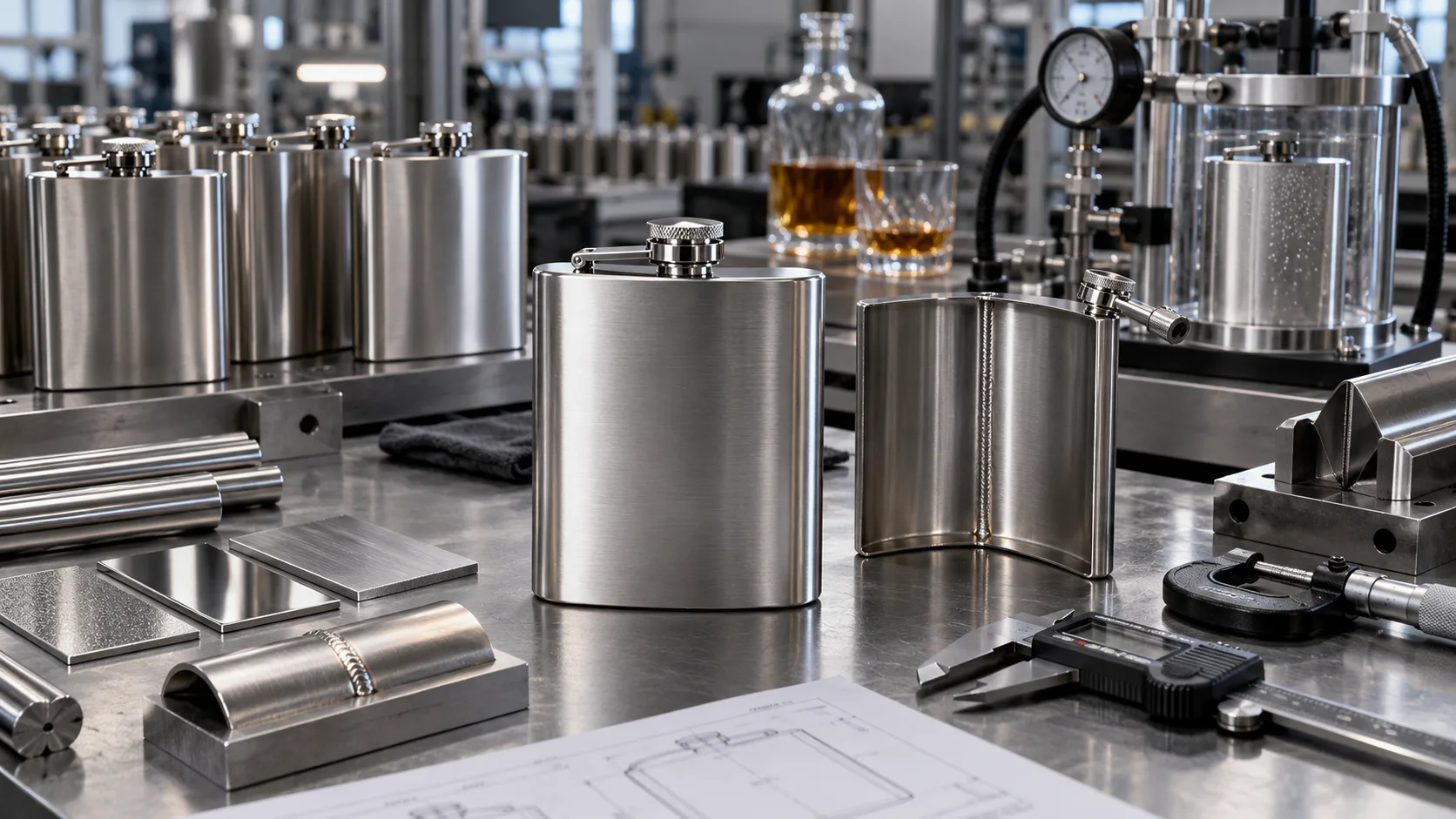
As a manufacturer, we get a lot of questions from brand owners looking to source the perfect hip flask. The conversation often starts with aesthetics—shape, color, and logo placement. While those are important, they don't get to the heart of what makes a flask great, or what makes one fail. The real quality is hidden in the details of the steel, the finish, and the construction. We want to pull back the curtain and show you what to ask to ensure you're getting a product that won't just look good, but will perform flawlessly and protect your brand's reputation. It’s about understanding the risks so you can make the right choice.
Is 316 Stainless Steel Really Better Than 304 for Your Hip Flask?
You see flasks made from both 304 and 316 steel. Choosing the wrong one can lead to corrosion and ruin the taste of expensive spirits. Understand the specific use case for each.
For high-alcohol spirits or acidic cocktails stored long-term, 316 stainless steel is superior1. Its molybdenum content offers better corrosion resistance2. For general, short-term use with less aggressive liquids, 304 is a reliable and cost-effective choice.
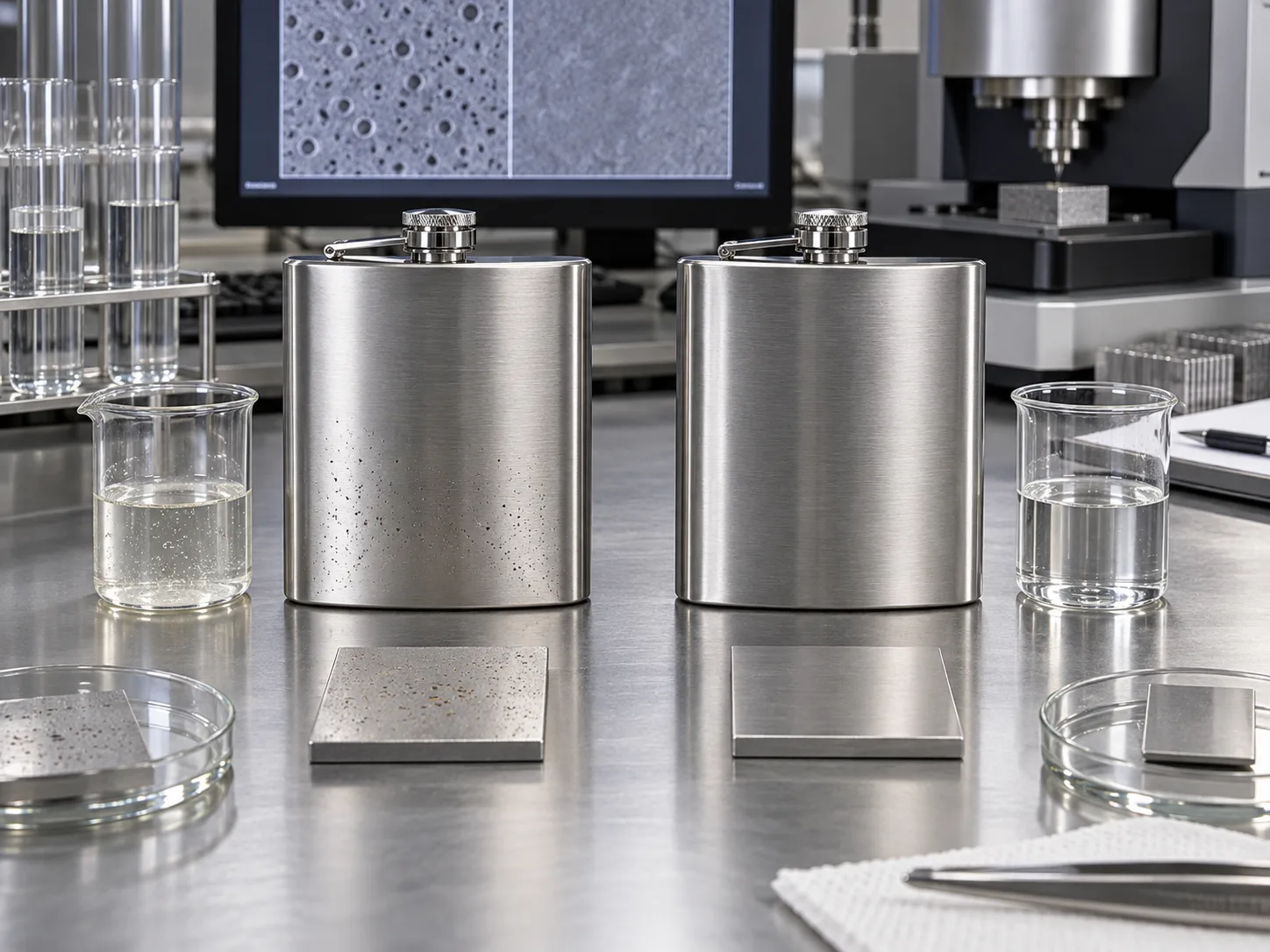
From our production experience, the first question we ask a client who is deciding between 304 and 316 steel is: "What will your customers put inside it?" This isn't a small detail; it determines the flask's long-term performance. The key difference is a single element: molybdenum. Grade 316 steel contains molybdenum, while 304 does not. This element significantly boosts resistance to corrosion, especially from chlorides and acids. Many spirits, especially aged whiskeys, have complex chemical profiles. Cocktails can be even more aggressive, introducing citric acids and salts. Over time, these compounds can cause microscopic pitting in 304 steel, which can lead to a metallic taste3. For a flask meant to hold a prized single malt or a carefully mixed Negroni, 316 is the only choice in our view. It's about protecting the integrity of the drink. We also advise clients to be wary of suppliers offering flasks without specifying the grade, or those using 201 steel—a low-cost alternative that rusts easily and is completely unsuitable for food or drink4.
| Steel Grade | Best Use Case | Key Advantage | Risk if Used Incorrectly |
|---|---|---|---|
| 316 SS | High-alcohol spirits, acidic cocktails | Superior corrosion resistance | None, but higher cost than 304 |
| 304 SS | Water, low-acid drinks, short-term storage | Cost-effective, food-safe | Potential for metallic taste with spirits over time |
| 201 SS | Not recommended for flasks | Low cost | High risk of rust and flavor contamination |
Does a Shiny Interior Guarantee a Taste-Free Flask?
A new flask looks clean and shiny inside. But after a few uses, it imparts a metallic taste to your whiskey. The secret is the microscopic surface finish, not just the shine.
Not all shiny interiors are equal. An electropolished finish is microscopically smoother than a standard mirror polish5. This reduces residue buildup and prevents metallic ions from leaching6, ensuring a truly taste-neutral experience for the user.
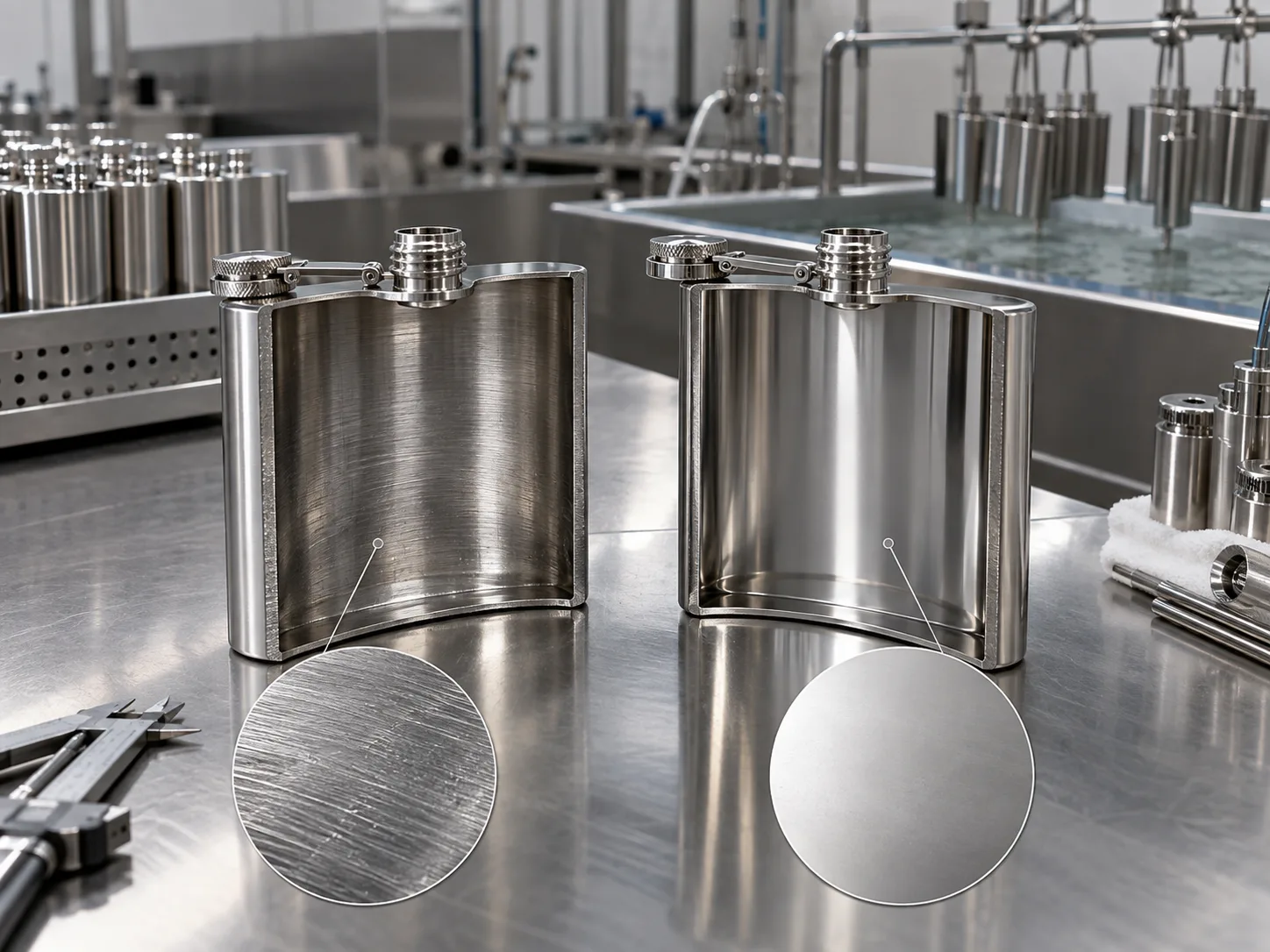
Many buyers assume that if the inside of a flask looks shiny, it's high quality. This is one of the biggest misconceptions we see. A standard mechanical "mirror polish" can look bright, but at a microscopic level, the surface is still full of tiny peaks and valleys7. These imperfections are large enough to trap liquid molecules and bacteria, leading to flavor ghosting8 and potential off-tastes. In our production process, we advocate for electropolishing. This is an electrochemical process, not a mechanical one. It removes a microscopic layer of metal from the surface%%%FOOTNOTE_REF9%%%, leveling it out and making it incredibly smooth and passive. [A passive surface is less reactive, meaning it's far less likely to release metallic ions into the liquid](https://en.wikipedia.org/wiki/Passivation(chemistry))10. It also makes the flask much easier to clean thoroughly. When a brand owner wants to market their flask for premium spirits, we explain that electropolishing isn't a luxury feature; it's a necessary step to guarantee the taste neutrality their customers will expect. It's a hidden feature that makes a world of difference.
How Can You Tell if a Hip Flask Will Survive a Real Adventure?
Your new flask looks tough and solid. But one drop on a hike leaves a huge dent, or worse, the seams start to leak. The key is in the wall thickness and weld quality.
Real-world durability comes from two things: wall thickness and weld integrity. A flask with 0.8mm walls is significantly more dent-resistant than one with 0.6mm walls11. Laser welding ensures stronger, leak-proof seams compared to older methods12.
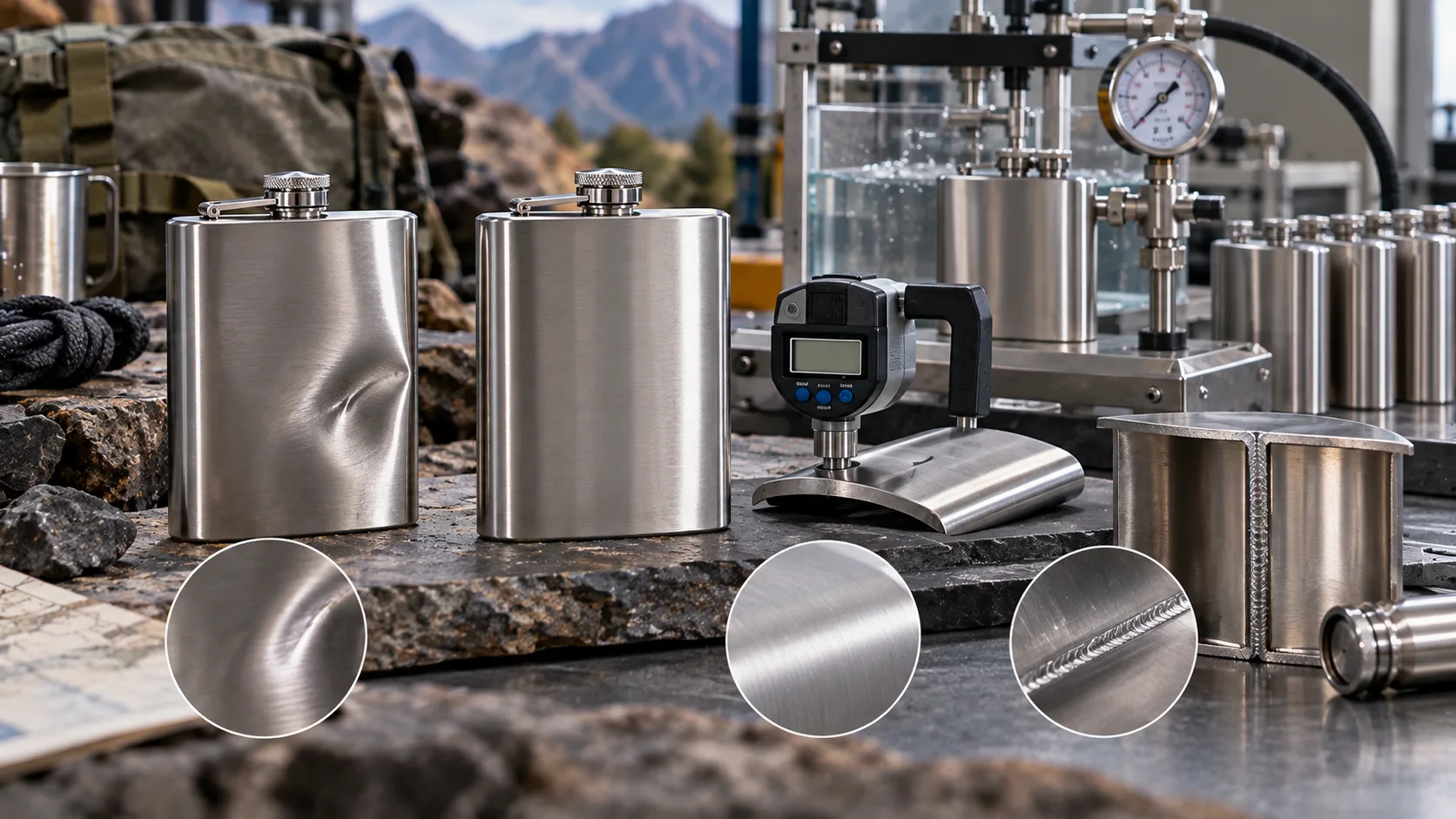
As a manufacturer, we know that durability is engineered, not accidental. For clients targeting the outdoor and adventure market, a flask is a piece of gear that has to withstand abuse. The first line of defense is wall thickness. Many low-cost flasks use walls as thin as 0.4mm or 0.5mm to save on material costs. They feel light, but they will dent if you just look at them wrong. We find that a wall thickness of 0.6mm is a good starting point for a lifestyle flask, but for a product meant for hiking or camping, we recommend 0.8mm. The difference in dent resistance is substantial. The second critical component is the welding. The body of a flask is typically made from two stamped pieces of steel that are welded together. We use a process called laser welding. It creates a clean, strong, and precise seam that fully fuses the metal. This is far superior to older, less controlled methods that can leave weak spots or microscopic gaps, leading to leaks over time. We pressure test our flasks to ensure every single one is perfectly sealed.
What's the One Question That Reveals a Truly Reliable Flask Supplier?
Every supplier's website looks professional. But how do you know if you'll get what they promised, or if you'll end up with a batch of duds that damages your brand's reputation?
Instead of asking what they offer, ask how they control and verify it. A reliable supplier can immediately tell you their process for material certification, interior finish grading, and weld seam inspection. Their answers reveal their true commitment to quality control.
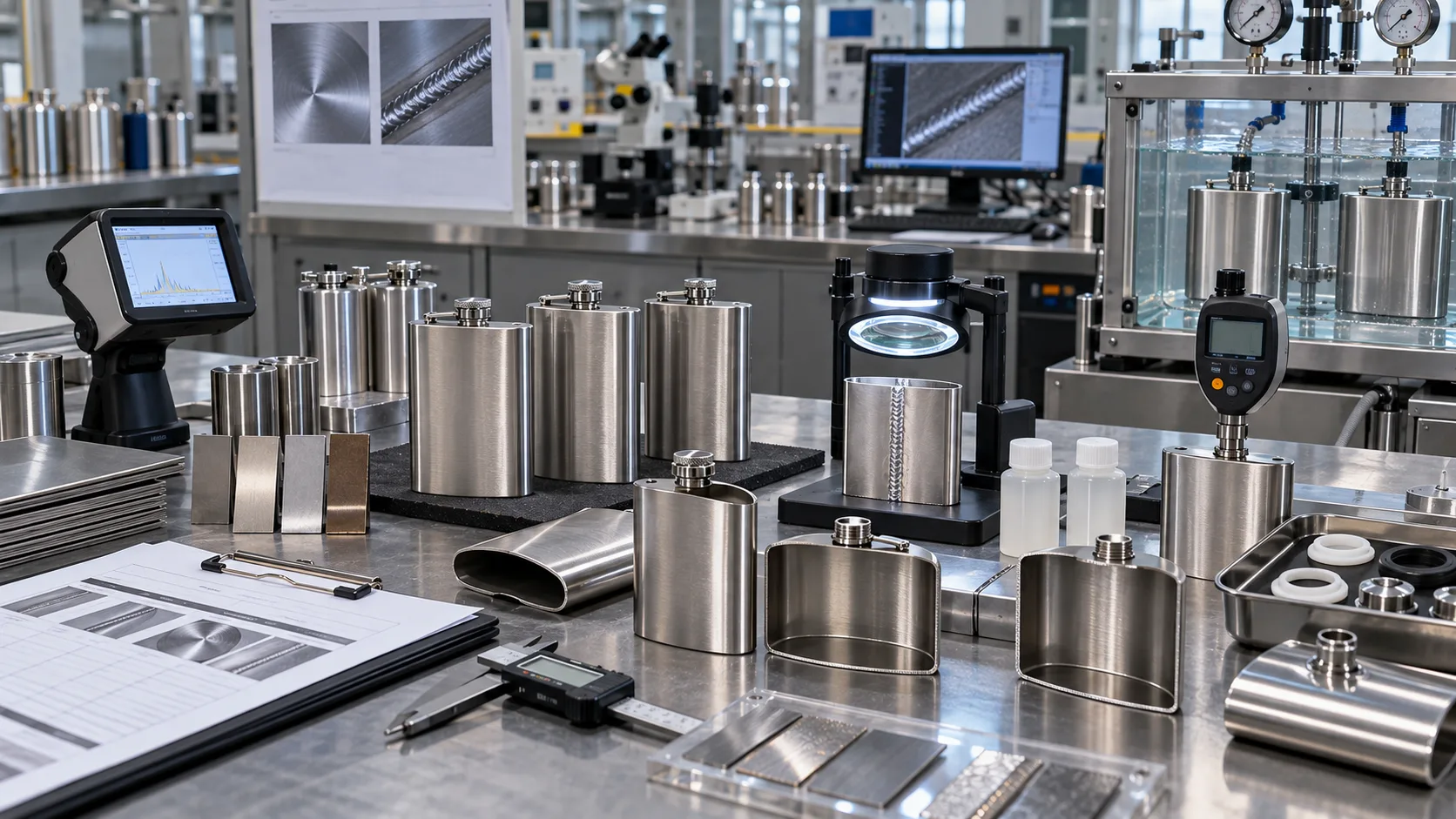
This is the most important takeaway for any brand owner. You can cut through all the marketing language with one simple framing: "What do you control, and how do you prove it?" A simple trader or a low-quality factory will stumble on this question. A true manufacturing partner will have ready answers. When you inquire about a production run, don't just accept "316 steel" on a spec sheet. Ask them, "Can you provide the material certificates for the specific batch of steel used for our order?" When they say the interior is "polished," ask, "What is your standard for the interior finish? Is it a mechanical polish or electropolished, and what is your quality check for taste neutrality?" For durability, ask, "What is the wall thickness in millimeters, and what is your process for weld inspection and leak testing?" The quality of their answers—the detail, the confidence, and the documentation they can provide—tells you everything you need to know. It separates the partners who build quality into their process from those who just hope for the best.
A Buyer's Quick-Ask Checklist
- On Materials: "What is your process for verifying the steel grade? Can I see a material certificate?"
- On Finishing: "Is the interior mechanically polished or electropolished? How do you ensure it is taste-neutral?"
- On Construction: "What is the wall thickness of the flask body? How are the seams welded and inspected?"
Conclusion
Choosing the right flask is about managing risk. Focus on steel grade for the use case, demand a superior interior finish, check construction specs, and verify your supplier's quality control.
"304 vs 316 Stainless Steel: What You Need to Know - Unified Alloys", https://www.unifiedalloys.com/blog/304-316-stainless/. A source from materials science can confirm that 316 stainless steel, due to its molybdenum content, exhibits superior resistance to pitting and crevice corrosion in chloride-containing and acidic environments compared to 304 stainless steel, making it more suitable for long-term contact with such substances. Evidence role: mechanism; source type: paper. Supports: The source should compare the chemical properties and corrosion resistance of 304 and 316 grade stainless steel, particularly in acidic or chloride-containing solutions.. Scope note: The source will likely discuss general chemical resistance rather than testing with specific alcoholic beverages. ↩
"SAE 316L stainless steel - Wikipedia", https://en.wikipedia.org/wiki/SAE_316L_stainless_steel. A materials science resource can explain that the addition of molybdenum to austenitic stainless steels, such as grade 316, significantly enhances their resistance to localized corrosion, particularly pitting corrosion caused by chlorides. Evidence role: mechanism; source type: encyclopedia. Supports: The source should explain the role of molybdenum as an alloying element in stainless steel.. ↩
"Corrosion Behavior of Sensitized AISI 304 Stainless Steel in ...", https://pmc.ncbi.nlm.nih.gov/articles/PMC9740934/. Research in food science or materials science can show that corrosion processes, such as pitting, can cause the release of metallic ions from stainless steel surfaces into a solution, which may be perceived as a metallic off-taste. Evidence role: mechanism; source type: paper. Supports: The source should discuss how corrosion of food-contact materials can lead to the release of metallic ions and affect the taste of food or beverages.. Scope note: The source may not specifically link 304 steel and spirits, but will support the general principle of corrosion-induced taste changes. ↩
"Food safe grades of stainless steel? : r/metallurgy - Reddit", https://www.reddit.com/r/metallurgy/comments/1dziimd/food_safe_grades_of_stainless_steel/. Industry resources and materials standards can confirm that 201-grade stainless steel has lower nickel and higher manganese content compared to 304, resulting in reduced corrosion resistance, making it generally considered unsuitable for applications involving prolonged contact with corrosive foodstuffs or liquids. Evidence role: general_support; source type: institution. Supports: The source should compare the composition and corrosion resistance of 201 stainless steel to 304 and 316 grades.. ↩
"[PDF] roughness reduction of additively manufactured steel by - OSTI.GOV", https://www.osti.gov/servlets/purl/1638686. Studies in surface engineering demonstrate that electropolishing can produce a significantly smoother surface on stainless steel, with lower average surface roughness (Ra) values, compared to standard mechanical polishing techniques. Evidence role: statistic; source type: paper. Supports: The source should provide data or microscopic evidence comparing the surface topography of electropolished and mechanically polished stainless steel.. ↩
"Electropolishing and Shaping of Micro-Scale Metallic Features - PMC", https://pmc.ncbi.nlm.nih.gov/articles/PMC8955333/. Research on food-contact materials shows that electropolishing enhances the chromium-rich passive oxide layer on stainless steel, which makes the surface more inert and significantly reduces the migration of metallic ions like nickel and chromium into food or beverages. Evidence role: mechanism; source type: research. Supports: The source should explain how electropolishing enhances the passive layer on stainless steel and reduces ion migration.. ↩
"Evolution of Surface Topography and Microstructure in Laser ... - PMC", https://pmc.ncbi.nlm.nih.gov/articles/PMC8836801/. Materials science literature explains that mechanical polishing is an abrasive process that creates a smooth appearance by smearing and cutting the surface material, but microscopically it leaves behind a series of fine scratches, folds, and embedded abrasive particles. Evidence role: definition; source type: education. Supports: The source should describe the physical nature of a mechanically polished surface at a microscopic scale.. ↩
"Role of the Surface Nanoscale Roughness of Stainless Steel on ...", https://pmc.ncbi.nlm.nih.gov/articles/PMC6045408/. Studies in microbiology and food science have shown a direct correlation between increased surface roughness on materials like stainless steel and higher rates of bacterial adhesion and biofilm formation, as microscopic crevices can harbor microorganisms and organic residues. Evidence role: mechanism; source type: paper. Supports: The source should discuss the relationship between surface roughness and the ability of microbes or organic molecules to adhere to a surface.. Scope note: The source will likely focus on bacteria or biofilms rather than 'flavor ghosting' specifically, but the underlying mechanism of trapping residues is the same. ↩
"Electropolishing - Wikipedia", https://en.wikipedia.org/wiki/Electropolishing. A technical resource can define electropolishing as an electrochemical process that removes material from a metallic workpiece. It functions as the reverse of electroplating, where microscopic high points on the surface are preferentially dissolved, resulting in a smoother, more level surface. Evidence role: definition; source type: encyclopedia. Supports: The source should provide a technical definition of the electropolishing process.. ↩
"Passivation (chemistry) - Wikipedia", https://en.wikipedia.org/wiki/Passivation_(chemistry). A materials science source can explain that passivation refers to the spontaneous formation of a thin, non-reactive surface film—primarily chromium oxide on stainless steel—that protects the underlying metal from corrosion and reduces its chemical reactivity, thereby inhibiting the release of metallic ions. Evidence role: definition; source type: education. Supports: The source should explain the chemical principle of passivation on stainless steel.. ↩
"Analysis Of Dynamic Dent Resistance Of Auto Body Panel - ADS", https://ui.adsabs.harvard.edu/abs/2007AIPC..907..252D/abstract. According to principles of mechanical engineering, the stiffness and resistance of a sheet material to bending or denting under impact is not linear but often proportional to the square or cube of its thickness. Therefore, a modest increase in wall thickness can lead to a substantially greater resistance to deformation. Evidence role: mechanism; source type: education. Supports: The source should explain the relationship between sheet material thickness and its resistance to deformation.. Scope note: The source will provide the general engineering principle rather than specific test data for 0.6mm vs 0.8mm flasks. ↩
"Laser Vs. TIG Welding: An Unbiased and Objective Comparison", https://cobot.systems/laser-vs-tig-welding/. Manufacturing and engineering sources note that laser welding offers advantages for thin stainless steel, including a small heat-affected zone, high precision, and deep penetration, which can result in strong, clean, and hermetically sealed seams with less distortion compared to conventional methods like TIG welding. Evidence role: general_support; source type: paper. Supports: The source should compare the characteristics of laser welds to other common welding methods for thin stainless steel.. ↩