Worried about harmful chemicals in your products? BPA can damage your customers’ health[^1] and your brand’s reputation. Choosing the right material is key to building trust and safety.
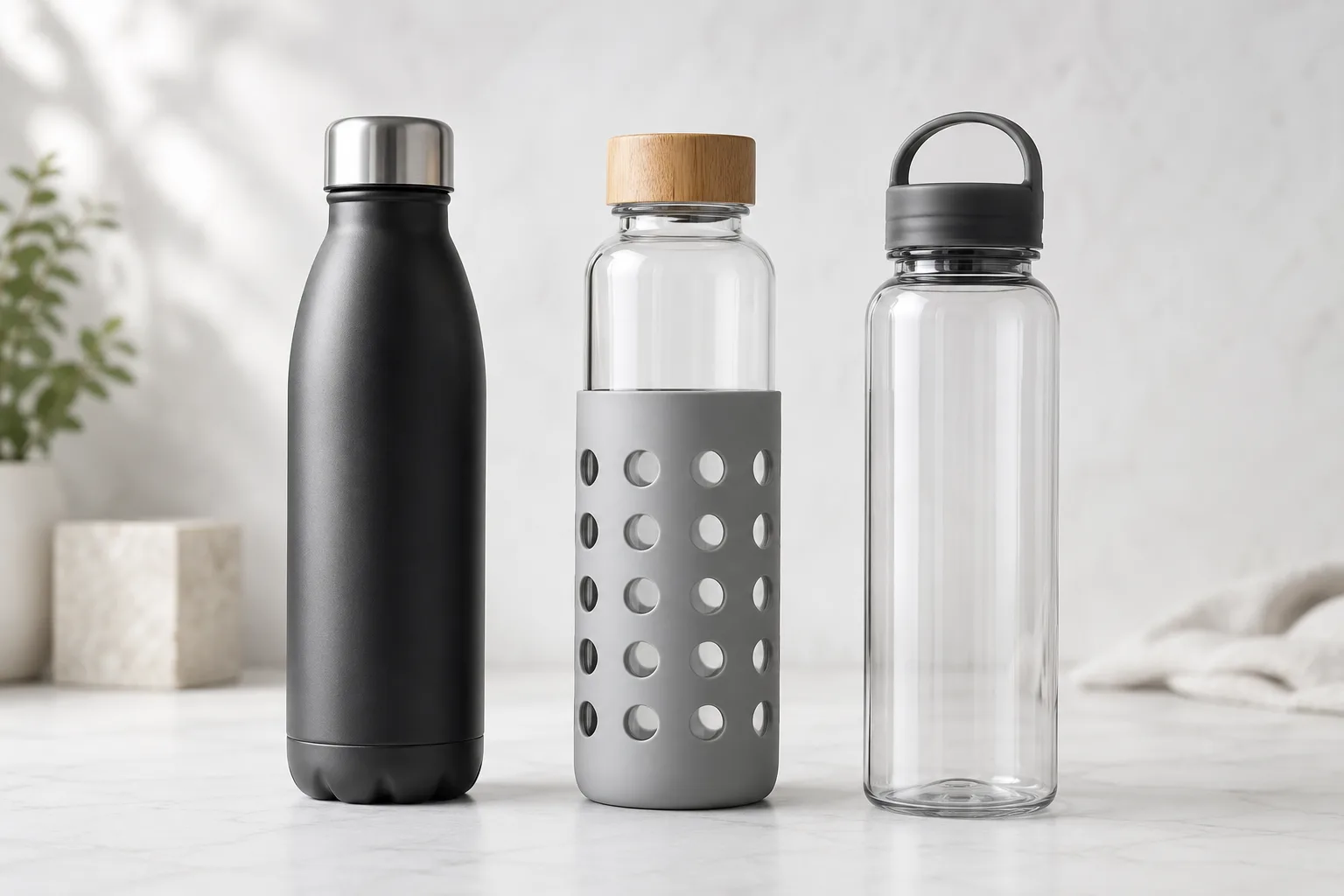
For a truly safe, BPA-free water bottle, choose materials like stainless steel (grades 304/316), glass, or BPA-free plastics such as Tritan. Stainless steel stands out for its durability, insulation properties, and professional look, making it a top choice for premium brands.
So, you know the safe materials. But why is stainless steel often the best pick for brands like yours? And what are the hidden risks with some "BPA-free" plastics? Let’s break it down so you can make an informed choice for your business. The details matter, and I’m here to walk you through them.
Why Is Stainless Steel the Top Choice for BPA-Free Bottles?
Want a material that’s safe, stylish, and sustainable? Many materials claim to be, but fall short on durability or performance. Stainless steel delivers on all fronts for your brand.
Stainless steel is the top choice because it’s naturally BPA-free, extremely durable, and doesn’t leach chemicals or flavors[^2]. Food-grade options like 304 and 316 stainless steel ensure maximum safety and longevity, protecting both your customers and your brand’s premium image.
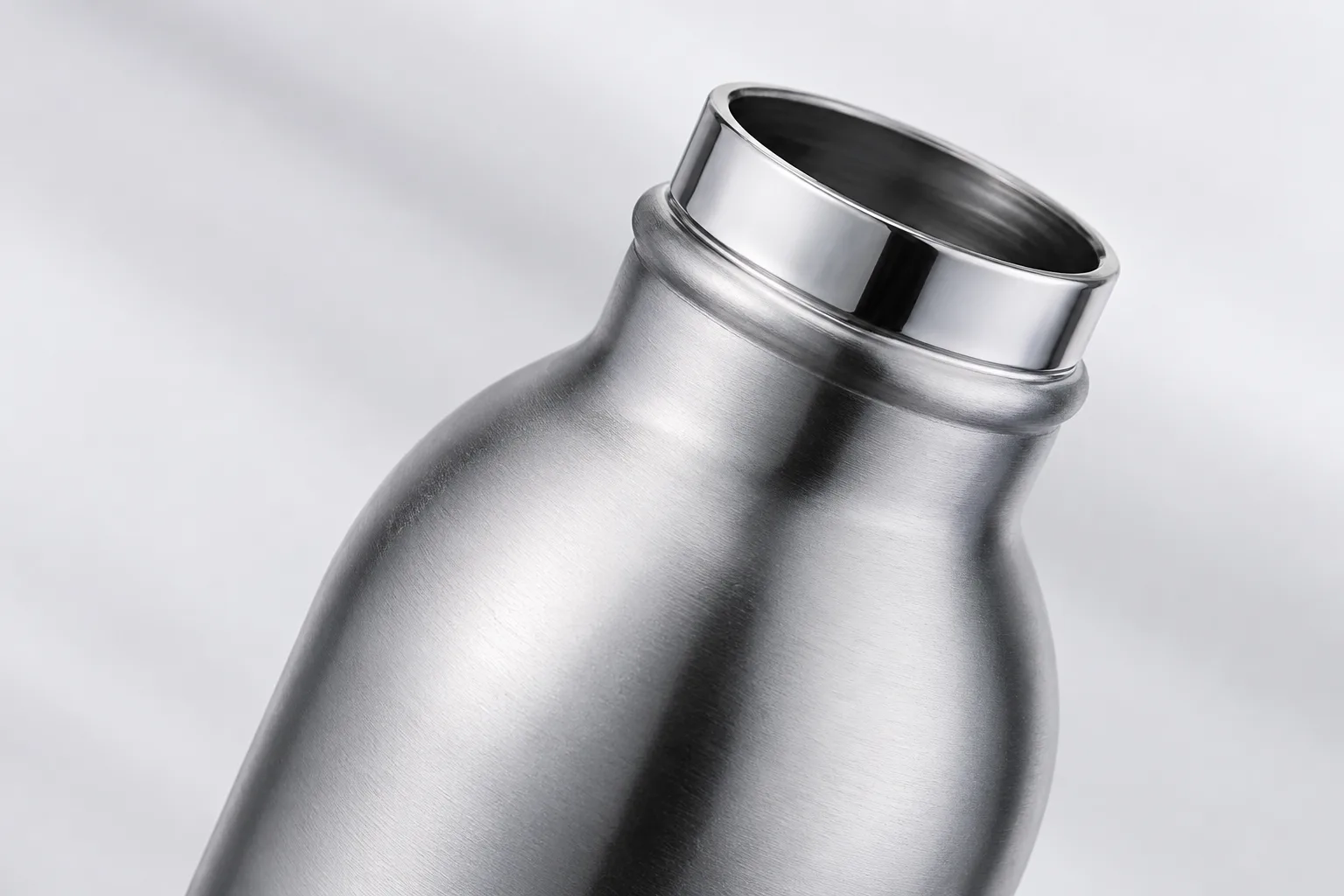
When you choose stainless steel, you’re not just picking a material; you’re making a statement about quality. I was amazed when I first got into this business by how versatile it is. Unlike plastics, steel doesn’t need chemical additives like BPA to achieve its form or function. It’s inherently safe. As a manufacturer, we primarily work with two types of food-grade stainless steel.
304 vs. 316 Stainless Steel
Both are excellent, but they have slight differences. 304 is the industry standard, sometimes called 18/8 steel because it’s made of 18% chromium and 8% nickel[^3]. It’s perfect for most everyday uses. Grade 316 includes molybdenum, which gives it extra corrosion resistance[^4]. This makes it ideal for marine environments or holding acidic drinks for long periods.
Here’s a simple breakdown for your brand:
| Feature | 304 Stainless Steel | 316 Stainless Steel |
|---|---|---|
| Best For | General use, coffee, water | Acidic drinks, harsh environments |
| Cost | More affordable | Slightly more expensive |
| Corrosion Resistance | Excellent | Superior |
| Brand Perception | High-quality industry standard | Premium, ultimate durability |
Choosing between them depends on your target audience. For most lifestyle brands, 304 stainless steel offers the perfect balance of performance, safety, and cost.
Are All Plastic Water Bottles Dangerous?
You see "BPA-free" on plastic bottles everywhere. But does that label really mean they are safe? The answer isn’t as simple as you think, and it can affect your brand.
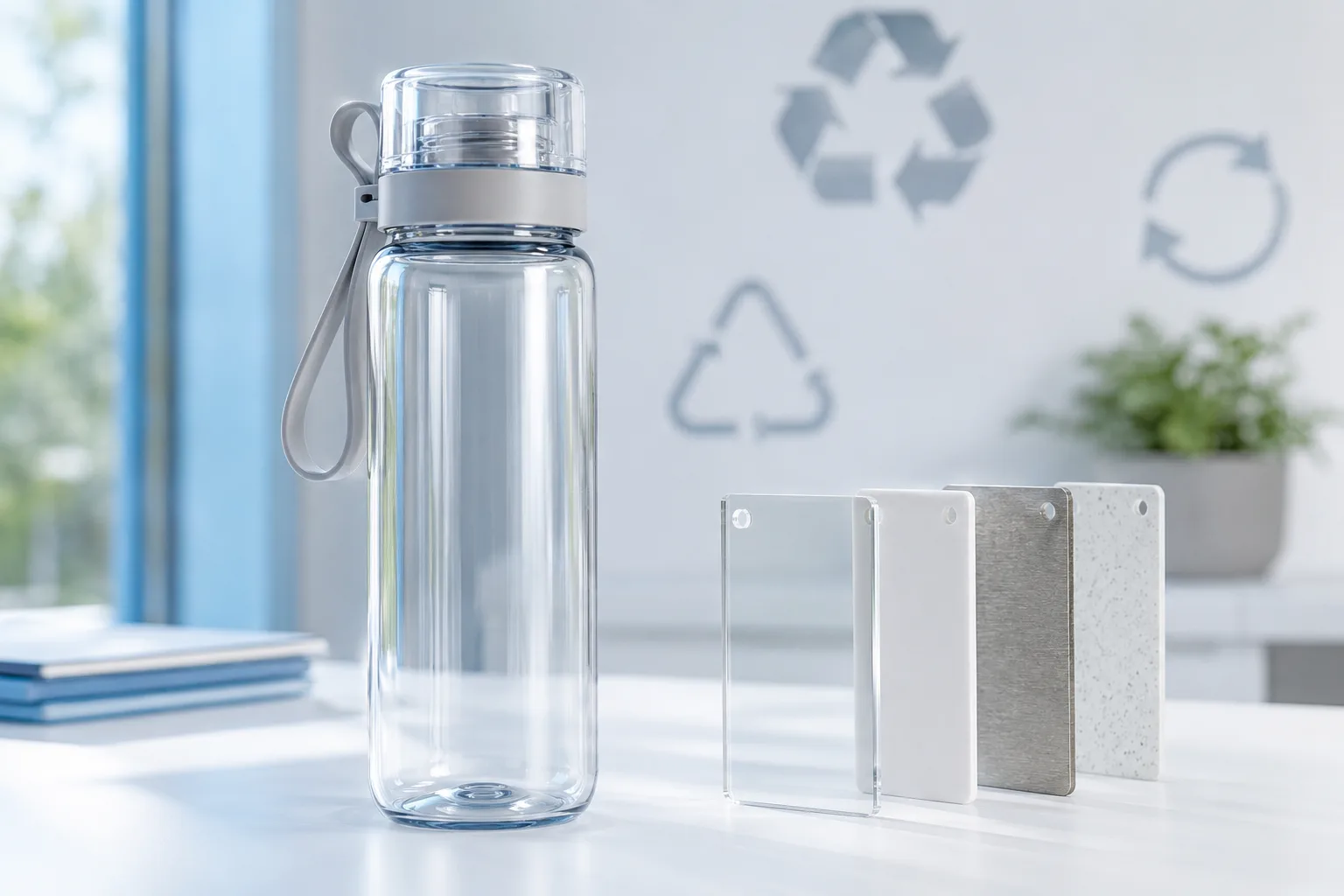
Not all plastics are dangerous. Look for bottles made from Tritan, a copolyester that is BPA-free, BPS-free, and shatter-resistant. However, you must avoid plastics with recycling code #7 (unless specified BPA-free), #3, and #6, as they can contain harmful chemicals.
The "BPA-free" sticker became a huge marketing tool. It’s important to understand what it truly means. BPA (Bisphenol-A) was used to make polycarbonate plastic hard and clear[^5]. When its health risks became public, many companies switched. The problem? Some switched to similar chemicals like BPS or BPF, which might have their own health concerns[^6]. I remember when the BPA scare first hit the news, and many brands panicked. The smart ones didn’t just switch to any "BPA-free" plastic; they did their research.
Navigating the World of Plastics
This is why you need to be careful as a brand owner. Not all plastics are created equal. Tritan is a great example of a truly safe alternative[^7]. It’s durable, clear as glass, and free from BPA and other bisphenols. However, other plastics can be tricky.
Here’s a quick guide to plastic recycling codes:
| Recycling Code | Plastic Type | BPA Risk | Recommendation for Brands |
|---|---|---|---|
| #1 PET/PETE | Polyethylene Terephthalate | Low | OK for single-use, not for reusable bottles. |
| #2 HDPE | High-Density Polyethylene | Low | Opaque, good for milk jugs, not premium bottles. |
| #5 PP | Polypropylene | Low | Often used for lids, it’s safe and durable. |
| #7 PC/Other | Polycarbonate / Other | High | Avoid, unless specifically certified as Tritan. |
When a supplier offers you a plastic bottle, always ask for the specific material type and its safety certifications. Don’t just settle for a "BPA-free" claim.
What About Glass and Other BPA-Free Alternatives?
Thinking about glass or aluminum bottles for your brand? They are BPA-free, but each comes with its own set of problems, from fragility to hidden plastic liners you need to know about.
Glass is an excellent BPA-free material that offers purity of taste, but it’s heavy and fragile. Aluminum bottles are lightweight but require a plastic liner, which could contain BPA or other chemicals. This makes stainless steel a more reliable and durable choice.
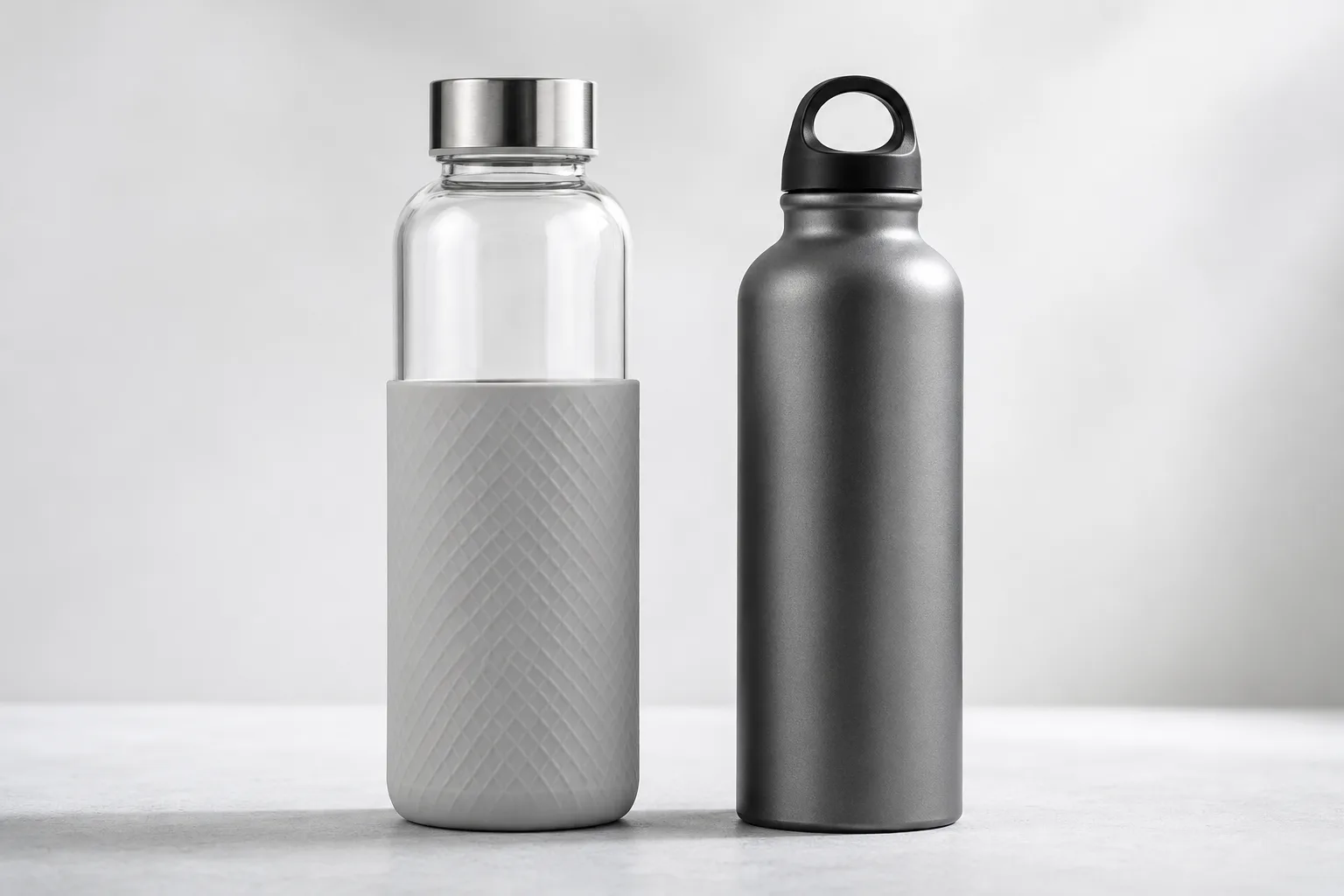
Stainless steel and safe plastics aren’t your only options. Many brands consider glass or aluminum to stand out. While both are BPA-free on the surface, they have significant trade-offs you need to consider before placing a bulk order.
Glass: Pure but Fragile
Glass is fantastic for taste. It’s completely inert, so it won’t give your water any weird flavors. It also has a clean, premium look. However, its drawbacks are major issues for most brands. It’s heavy, which increases shipping costs. More importantly, it’s fragile. We’ve had clients come to us after a bad experience with glass bottles. A whole shipment broke in transit. It’s a brand’s nightmare. Silicone sleeves can help, but they don’t eliminate the risk.
Aluminum: The Hidden Liner Problem
Aluminum bottles are lightweight and cheap, which sounds great. But here’s the catch: raw aluminum can react with liquids and leach into your drink[^8]. To prevent this, aluminum bottles must have an inner lining. This liner is often a plastic or epoxy resin, which can contain BPA[^9]. So, your "metal" bottle might not be as pure as you think. It also dents very easily, which can damage your brand’s image.
How Can You Verify a Manufacturer’s BPA-Free Claims?
Your supplier says their bottles are BPA-free. But can you trust them? Blind trust can lead to legal issues and a damaged brand. You need proof, not just promises.
To verify a BPA-free claim, always ask your manufacturer for third-party lab test reports from labs like SGS or TUV[^10]. These reports should specify the material (e.g., SS304, Tritan) and explicitly state that it passes tests for BPA and other harmful substances.

As a brand owner, your reputation is on the line. You can’t just take a manufacturer’s word when it comes to safety. I always tell my clients, "Trust is good, but verification is better." This protects you, your customers, and your business. A few years back, a potential client showed me a report from a supplier. It looked official, but it was for a different product model. That’s a huge red flag. Details matter.
Your Due Diligence Checklist
When you partner with a manufacturer, here’s what you should demand to see. If they hesitate to provide these, it’s a major red flag.
- Material Specification Sheet: This document confirms the exact grade of material being used, for example, "Stainless Steel Grade 304" or "Eastman Tritan™ Copolyester."
- Third-Party Lab Test Reports: These are the most important. Ask for recent reports from reputable labs like SGS, TUV, or Intertek. The report should test for BPA, lead, and other contaminants and clearly state "Pass."
- Compliance Certifications (FDA/LFGB): These certificates show the product meets food-contact safety standards. FDA is for the USA, while LFGB is the tougher standard for Germany and the EU[^11].
A reliable partner like us will have this documentation ready. We are transparent about our materials and processes. It’s the foundation of a professional, trustworthy relationship.
Conclusion
Choosing BPA-free is simple: stainless steel is your safest, most professional bet. It protects your customers’ health and builds a brand reputation that lasts. Ready to get started?
[^1]: "Update on the Health Effects of Bisphenol A – PMC – NIH", https://pmc.ncbi.nlm.nih.gov/articles/PMC7846099/. Research by the U.S. Food and Drug Administration and National Toxicology Program has identified potential health concerns with BPA exposure, particularly regarding endocrine disruption and developmental effects, though the extent of risk at typical exposure levels remains debated among regulatory agencies. Evidence role: expert_consensus; source type: government. Supports: BPA’s documented health effects and regulatory concerns. Scope note: Regulatory consensus on BPA risk levels varies internationally, and ongoing research continues to refine understanding of exposure thresholds
[^2]: "Stainless Steel Leaches Nickel and Chromium into Foods During …", https://pmc.ncbi.nlm.nih.gov/articles/PMC4284091/. Food-grade stainless steel alloys form a passive chromium oxide layer that prevents metal ion migration into food and beverages under normal use conditions, as documented in materials science studies on corrosion resistance and food contact safety. Evidence role: mechanism; source type: research. Supports: The chemical stability and non-reactive properties of food-grade stainless steel. Scope note: Leaching can occur under extreme conditions such as prolonged contact with highly acidic solutions or damaged surface coatings
[^3]: "SAE 304 stainless steel – Wikipedia", https://en.wikipedia.org/wiki/SAE_304_stainless_steel. According to ASTM International standards, 304 stainless steel (UNS S30400) contains approximately 18-20% chromium and 8-10.5% nickel, with the balance being iron and trace elements, which gives it the common designation 18/8. Evidence role: definition; source type: institution. Supports: The standardized chemical composition of 304 stainless steel.
[^4]: "Effect of Molybdenum Additions on the Microstructures and …", https://www.osti.gov/servlets/purl/1439854. Grade 316 stainless steel contains 2-3% molybdenum, which significantly improves resistance to pitting and crevice corrosion in chloride environments by stabilizing the passive film, as explained in metallurgical engineering literature. Evidence role: mechanism; source type: education. Supports: The role of molybdenum in enhancing corrosion resistance in 316 stainless steel.
[^5]: "One-Step Conversion of Bisphenol A Polycarbonate into Aliphatic …", https://pubmed.ncbi.nlm.nih.gov/40542594/. Bisphenol A serves as a monomer in the synthesis of polycarbonate plastics through polymerization reactions, producing the rigid, transparent thermoplastic material widely used in consumer products before health concerns emerged. Evidence role: mechanism; source type: encyclopedia. Supports: BPA’s chemical function in polycarbonate plastic manufacturing.
[^6]: "Effects of bisphenol F, bisphenol S, and bisphenol AF on cultured …", https://pmc.ncbi.nlm.nih.gov/articles/PMC10256648/. Toxicological studies have indicated that bisphenol S (BPS) and bisphenol F (BPF) may exhibit endocrine-disrupting properties similar to BPA, though research is ongoing and regulatory assessments remain incomplete compared to the more extensively studied BPA. Evidence role: expert_consensus; source type: research. Supports: Emerging research on health effects of BPA substitutes. Scope note: The body of research on BPS and BPF is substantially smaller than for BPA, and long-term health effects are not yet fully characterized
[^7]: "Lack of androgenicity and estrogenicity of the three monomers used …", https://pubmed.ncbi.nlm.nih.gov/22343188/. Independent laboratory testing commissioned by the manufacturer has shown Tritan copolyester to be free of estrogenic and androgenic activity in standard assays, though some contested studies have suggested potential hormonal activity under specific conditions. Evidence role: general_support; source type: research. Supports: Independent testing of Tritan’s safety profile. Scope note: The safety assessment of Tritan has been subject to scientific debate, with some independent researchers questioning testing methodologies and calling for additional long-term studies
[^8]: "Corrosion Behavior of Aluminium-Coated Cans – PMC – NIH", https://pmc.ncbi.nlm.nih.gov/articles/PMC9921712/. Studies on metal migration have demonstrated that uncoated aluminum can react with acidic beverages, leading to aluminum ion leaching, which is why food-contact aluminum products typically require protective coatings or liners to prevent metal migration. Evidence role: mechanism; source type: research. Supports: Aluminum’s chemical reactivity with acidic liquids.
[^9]: "Migration of Bisphenol A and Its Derivatives From Epoxy Coatings …", https://pmc.ncbi.nlm.nih.gov/articles/PMC12711388/. Epoxy resins used as protective liners in metal food and beverage containers have historically been formulated with bisphenol A, though many manufacturers have transitioned to BPA-free alternatives in response to regulatory pressure and consumer concerns. Evidence role: general_support; source type: research. Supports: Historical use of BPA in epoxy resin liners for metal containers. Scope note: Current industry practices vary widely, and not all aluminum bottle liners contain BPA, making generalization difficult without product-specific testing
[^10]: "SGS | Occupational Safety and Health Administration", http://www.osha.gov/nationally-recognized-testing-laboratory-program/sgs. SGS and TÜV are internationally recognized testing, inspection, and certification organizations with ISO/IEC 17025 accreditation for laboratory testing, providing independent verification services across multiple industries including consumer products and food contact materials. Evidence role: general_support; source type: institution. Supports: The international recognition of SGS and TUV as testing and certification bodies.
[^11]: "Food Packaging & Other Substances that Come in Contact with Food", https://www.fda.gov/food/food-ingredients-packaging/food-packaging-other-substances-come-contact-food-information-consumers. The German LFGB (Lebensmittel- und Futtermittelgesetzbuch) and U.S. FDA regulations both establish safety requirements for food contact materials, with LFGB often requiring more extensive migration testing and sensory evaluation, though direct comparisons of overall stringency depend on specific material categories and testing parameters. Evidence role: general_support; source type: government. Supports: The regulatory frameworks of FDA and LFGB for food contact materials. Scope note: Characterizing one regulatory framework as universally ‘tougher’ oversimplifies the complexity of different testing requirements, approval processes, and enforcement mechanisms between jurisdictions