
You are investing in a large order of custom tumblers, but worry about receiving cheaper, unsafe steel. A bad batch could ruin your brand's reputation and customer trust.
The most reliable way to verify you are getting genuine 304 stainless steel is to use a multi-step process. Do not rely on a single test. Instead, demand the raw material certificates from the factory and request a Positive Material Identification (PMI) report for your specific production batch.
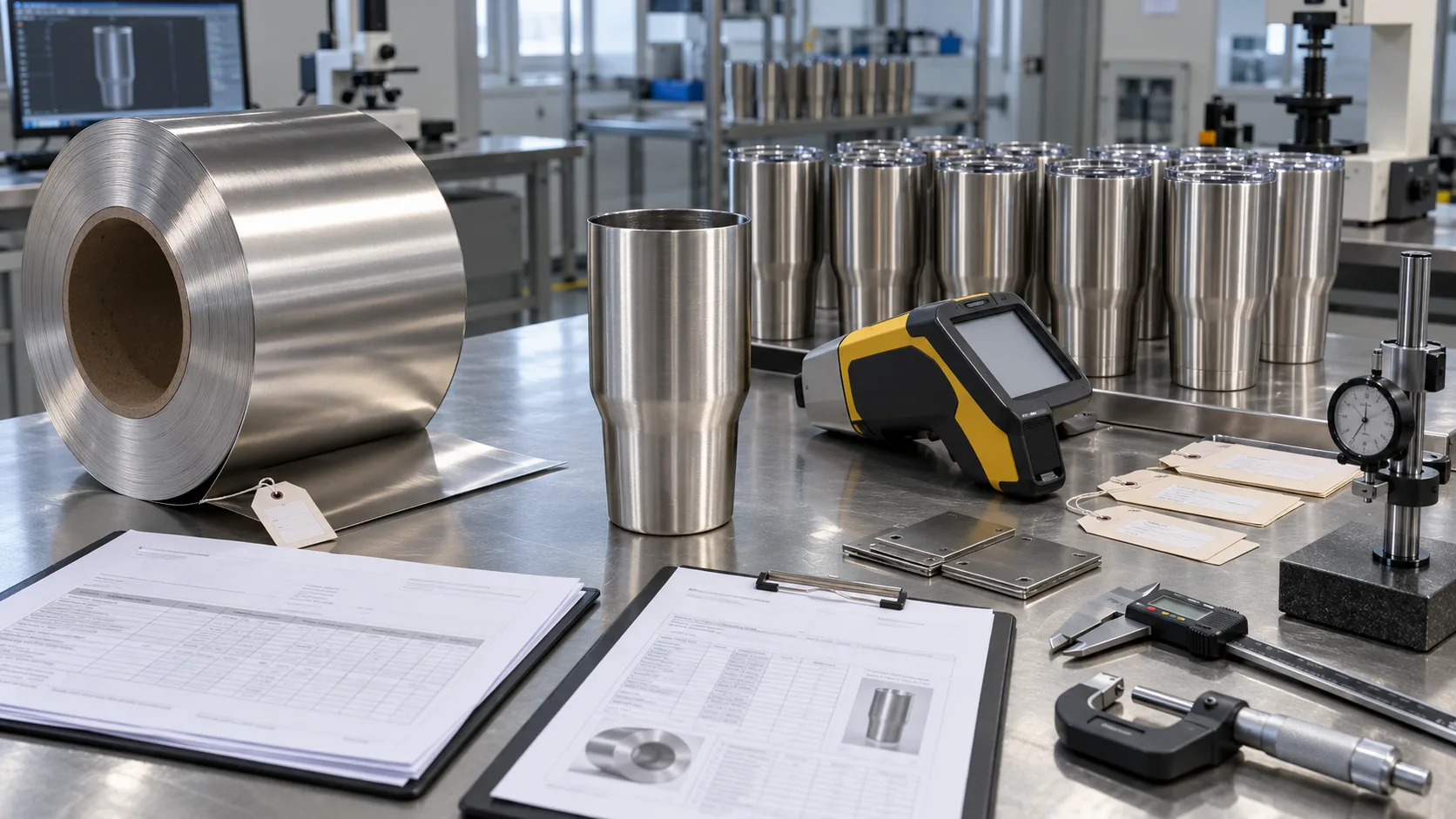
Many buyers I speak with use simple shortcuts they believe will protect them. Unfortunately, these common methods often create a false sense of security. The real risk isn't just about spotting one fake tumbler; it's about making sure your entire container is made from the right material. To do that, you need a professional verification process. Let's break down the myths and show you the steps that we, as a manufacturer, actually use to ensure quality. It's time to move beyond guesswork and start using a system that works.
Why is the magnet test a misleading shortcut for stainless steel tumblers?
You placed a magnet on a tumbler sample, it didn't stick, and you felt relieved. But what if that test tells you almost nothing about the quality of the steel?
The magnet test is an unreliable myth because both food-grade 304 and lower-grade 201 stainless steel are non-magnetic1. A magnet failing to stick does not prove the tumbler is made from 304 steel, leaving your brand exposed to significant material substitution risk.
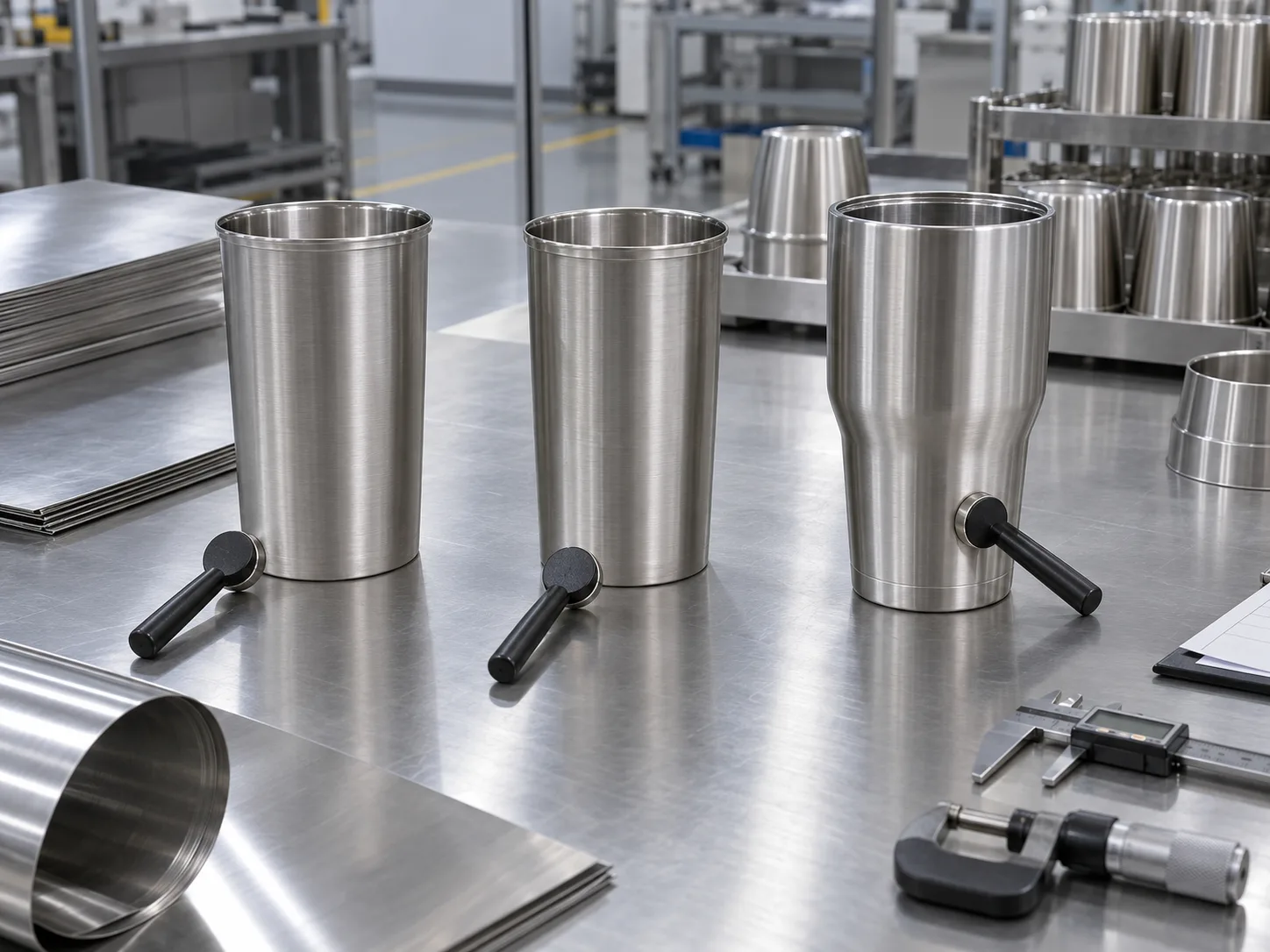
In our experience on the factory floor, the magnet test is the most common and dangerous misconception among buyers. Here is why it doesn't work. Stainless steel comes in different families. Both 304 and 201 belong to the "austenitic" family. In their raw, softened state (annealed), these steels are not magnetic. So, when a magnet doesn't stick, it could be 304, or it could be the cheaper, rust-prone 201. The test can't tell them apart.
To make it more confusing, the manufacturing process—like shaping and forming the tumbler—can sometimes make small parts of the steel slightly magnetic2. This can cause even more confusion. Relying on this test is like flipping a coin. I have seen buyers confidently approve samples based on this simple check, not realizing they were accepting a huge risk for their bulk order.
A Better Way to Think About Steel Grades
Instead of a magnet, you should understand the basic differences between the common steel types.
| Property | 304 Stainless Steel | 201 Stainless Steel |
|---|---|---|
| Primary Use | Food & Beverage | Decorative, structural |
| Corrosion Resistance | Excellent | Poor |
| Key Element | High Nickel (~8%) | High Manganese |
| Magnetism (Raw) | Non-magnetic | Non-magnetic |
| Risk Factor | Industry standard | Rusts with acidic drinks |
Are SGS or FDA reports a real guarantee of 304 stainless steel quality?
Your supplier sent over an impressive-looking SGS report. It seems everything is in order, right? But what if that certificate is for a batch made last year, using different materials?
An SGS or FDA report only verifies the specific sample that was sent for testing at a single point in time3. It is not a guarantee for your entire production run. To protect yourself, you must confirm the report is recent and directly linked to your specific order.
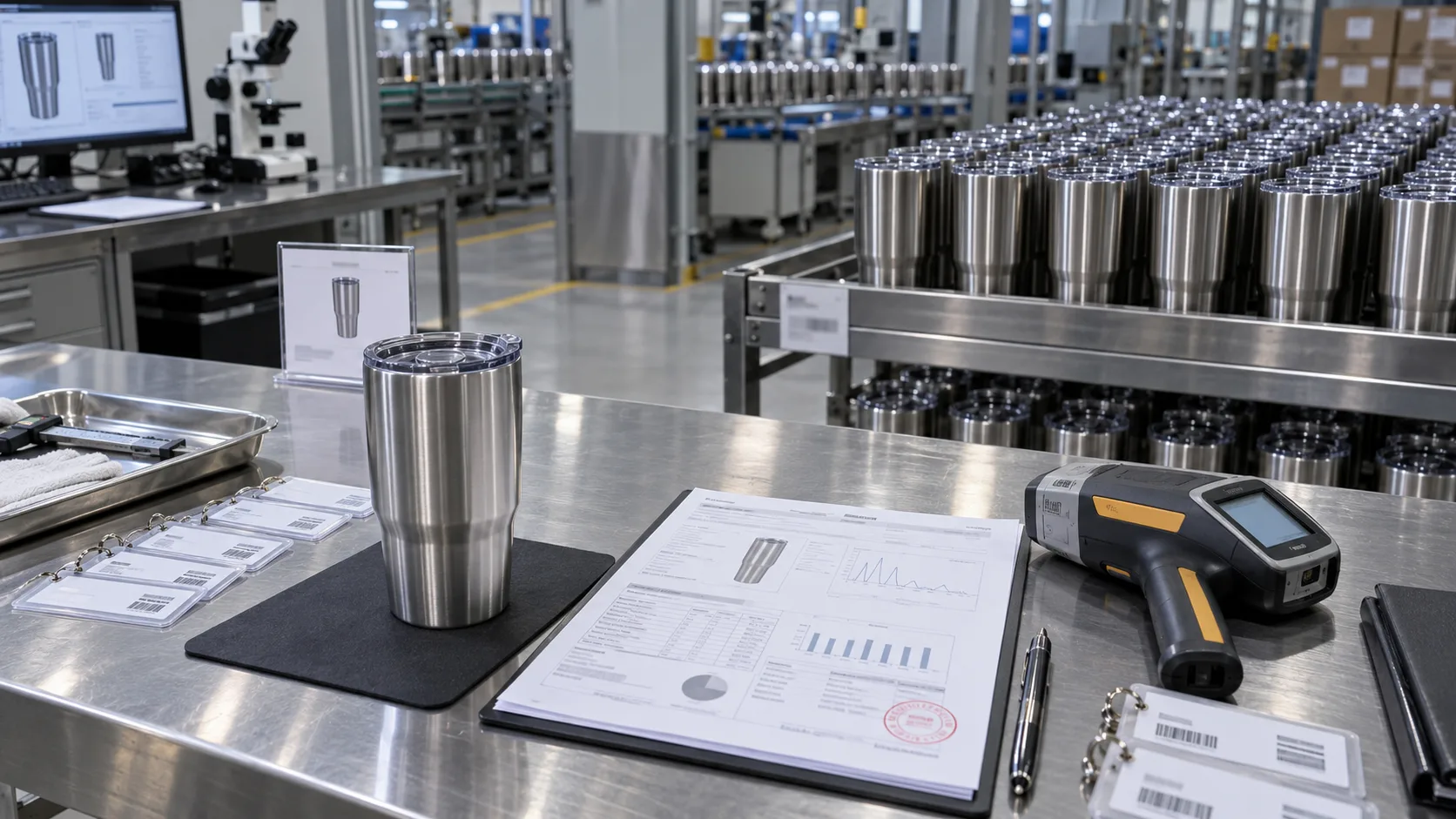
Think of a lab report as a snapshot, not a continuous video. A factory can send a perfect, compliant tumbler for testing and receive a passing certificate. That certificate proves that one tumbler was good on that one day. However, an unethical supplier could then use cheaper materials for a subsequent production run and still show you that same old report. From what we see in the supply chain, this is a real risk.
As a buyer, you need to be a detective. When you receive a report, don't just file it away. Check the date on the report. Is it recent? Does the product description on the report match your tumbler exactly? Most importantly, does it reference a specific production lot or purchase order number? Ask your supplier to provide a report that is tied directly to your batch. A trustworthy partner will understand this request and be able to provide it. This simple step changes the document from a marketing tool into a true piece of quality assurance for your order.
What are the real material substitution risks you face with stainless steel tumblers?
You clearly specified "304 stainless steel" in your purchase order. But do you know what you might get instead? Using a lower-grade steel can lead to rust, unhappy customers, and damage to your brand.
The most common substitutions for 304 stainless steel are grade 201 and grade 4304. These materials are cheaper but have significantly lower corrosion resistance. They can rust or leach metals, especially with acidic drinks5 like coffee, juice, or soda.
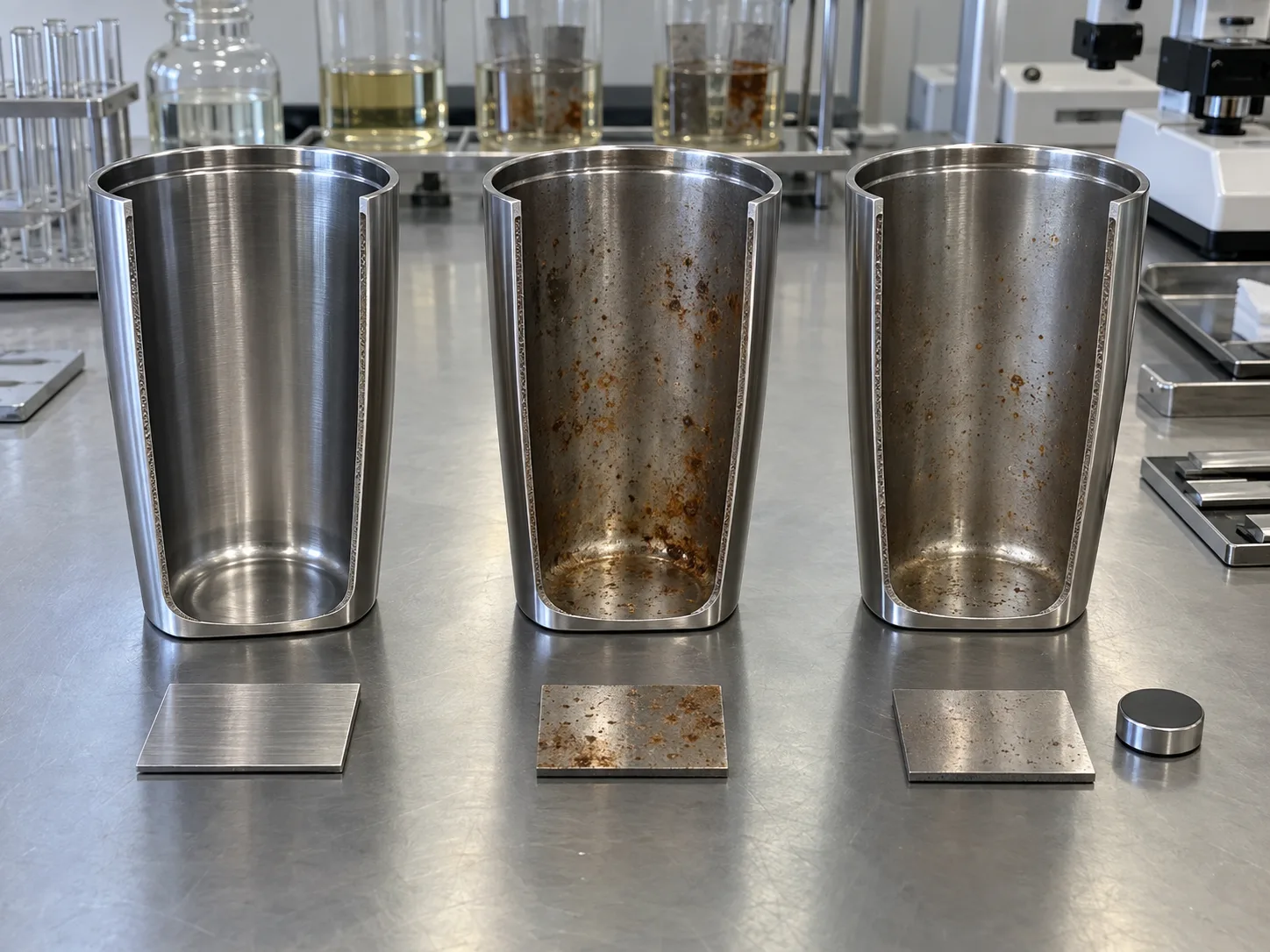
Understanding these substitutes is critical. The main reason a factory would switch materials is to save money. Nickel is the key ingredient that gives 304 steel its excellent rust resistance6, but it's also expensive. 201 steel replaces most of the nickel with cheaper manganese7. The result is a steel that looks almost identical to 304 but will start to show rust spots quickly8, especially on the inside. This is a huge problem for a drinks container.
430 steel is another possible substitute. It's a food-grade steel but belongs to a different family (ferritic) and contains almost no nickel9. Its corrosion resistance is better than 201 but not as good as 304. One key difference is that 430 steel is magnetic10. So, the magnet test might catch a 430 substitution, but it will completely miss the more common and dangerous 201 substitution.
Quick Comparison of Common Steel Grades
| Feature | 304 Stainless Steel | 201 Stainless Steel | 430 Stainless Steel |
|---|---|---|---|
| Grade Family | Austenitic (Food-Grade) | Austenitic (Industrial) | Ferritic (Food-Grade) |
| Nickel Content | ~8% | ~1% | ~0% |
| Rust Resistance | Excellent | Poor (High Risk) | Fair (Medium Risk) |
| Magnetism | No | No | Yes |
Always ask your supplier to confirm in writing, on the purchase order, which specific grade of steel will be used for both the inner and outer walls.
What is the most reliable way to verify the 304 stainless steel in your order?
You are tired of myths and half-truths. You need a clear, reliable process to protect your investment. So how can you confidently verify your tumblers are made from genuine 304 stainless steel?
The most reliable method is a layered verification process. Start by requesting the raw material certificates for the steel coils. Then, insist on a Positive Material Identification (PMI) test report that is specific to your production batch.
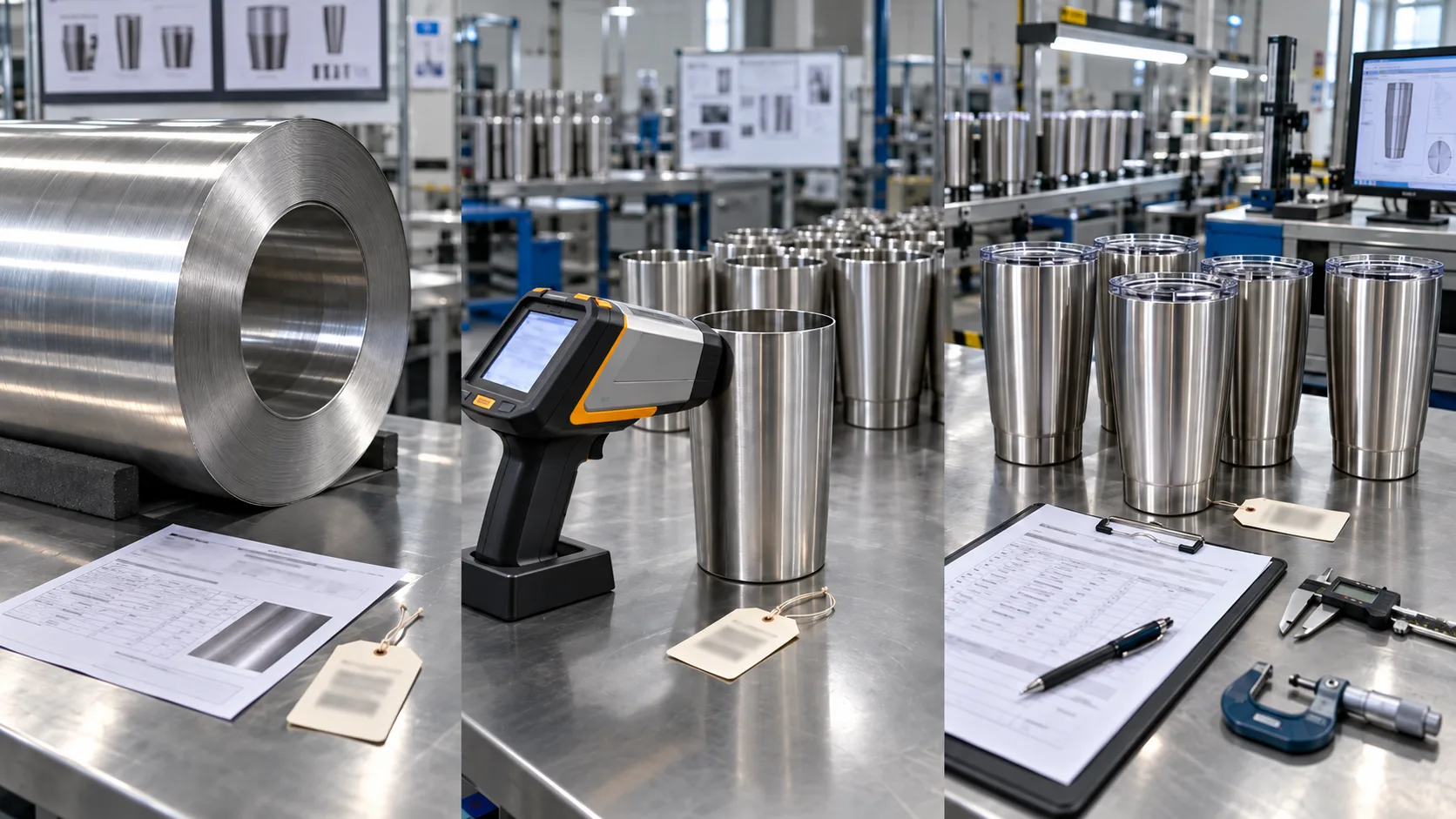
There is no single magic trick. Instead, you need a professional workflow. This is what responsible factories do for their own incoming quality control, and it’s what you should demand.
Here is a step-by-step process you can follow:
1. The Paperwork Trail: Material Certificates
Before production even starts, ask your supplier for the Material Mill Test Certificate (MTC)11 for the stainless steel coils they will use for your order. This document comes from the original steel mill and shows the exact chemical composition of the raw material, including the percentages of nickel and chromium. This proves they started with the right ingredients.
2. The On-Site Check: PMI Testing
Next, ask the factory to perform a PMI test on the raw materials or finished goods for your order. This test uses a handheld device called an XRF analyzer, which instantly reads the elemental composition of the steel12. It's a fast and accurate way to confirm "Is this 304?" We use this in our own factory to check every new batch of steel that arrives. Ask for a copy of this test report, ensuring it references your order.
3. The Ultimate Guarantee: Third-Party Inspection
For large or high-value orders, the strongest protection is to hire an independent third-party inspection company (like SGS, Intertek, or QIMA). They can go to the factory, pull random tumblers from your production line, and perform their own PMI test. This provides unbiased verification that the products being made for you, right now, are compliant. It's an extra cost, but it offers complete peace of mind.
Conclusion
Verifying 304 stainless steel isn't about a single secret trick. It's about implementing a smart, layered process of documentation and testing that protects your brand and ensures you get what you paid for.
"Is Stainless Steel Magnetic? - Terpconnect", https://terpconnect.umd.edu/~wbreslyn/magnets/is-stainlesssteel-magnetic.html. A source from a materials science resource or steel industry association can confirm that austenitic stainless steels, which include both the 304 and 201 grades, are non-magnetic in their annealed condition due to their crystal structure. Evidence role: definition; source type: education. Supports: The claim that austenitic stainless steels, including grades 304 and 201, are non-magnetic in their annealed (raw) state.. ↩
""Deformation Induced Martensitic Transformation In 304 Stainless ...", https://scholarcommons.sc.edu/etd/3804/. A source from a materials science journal or technical guide can explain that cold working (the mechanical stress from shaping or forming) can cause a partial transformation of the non-magnetic austenite crystal structure into a magnetic martensite structure in some stainless steels. Evidence role: mechanism; source type: paper. Supports: The claim that manufacturing processes like forming and shaping can induce slight magnetism in otherwise non-magnetic austenitic steels.. ↩
"Errors within the total laboratory testing process, from test selection ...", https://pmc.ncbi.nlm.nih.gov/articles/PMC7271754/. A document from a major third-party inspection agency (such as SGS, Intertek, or TÜV) or a quality management resource can clarify that a product test report reflects the properties of the submitted sample at the time of testing and is not a certification for an entire, subsequent production run. Evidence role: general_support; source type: institution. Supports: The claim that a third-party lab report is valid only for the specific item tested and does not guarantee the quality of an entire production batch.. ↩
"[PDF] Product Substitution - DOC OIG", https://www.oig.doc.gov/wp-content/OIGPublications/Post-2_Product-Substitution_Flyer_2021-11-09.pdf. An article from a quality control agency or a manufacturing trade publication can discuss the widespread issue of material substitution in the steel supply chain, often identifying the 200-series steels as a common, lower-cost replacement for 304-grade steel in consumer products. Evidence role: general_support; source type: other. Supports: The claim that lower-cost grades like 201 are often substituted for grade 304 in manufacturing.. Scope note: The source may discuss the general problem of material substitution in the steel industry rather than specifically for tumblers, but the economic incentive and practice are the same. ↩
"Stainless Steel Leaches Nickel and Chromium into Foods During ...", https://pmc.ncbi.nlm.nih.gov/articles/PMC4284091/. Research on food contact materials can demonstrate that stainless steels with lower nickel and chromium content, such as grade 201, exhibit lower corrosion resistance and a higher potential for leaching elements like manganese when exposed to acidic solutions compared to grade 304. Evidence role: case_reference; source type: paper. Supports: The claim that lower-grade stainless steels have a higher risk of corrosion and metal leaching when exposed to acidic substances.. Scope note: The source may focus on general food safety principles or specific test conditions rather than tumblers, but the chemical interaction is directly relevant. ↩
"Nickel release from stainless steels - PubMed", https://pubmed.ncbi.nlm.nih.gov/9330816/. A source from a materials science textbook or a steel industry association can explain that nickel acts as an austenite stabilizer and promotes the formation of a durable, self-healing passive oxide layer on the surface of the steel, which provides its characteristic corrosion resistance. Evidence role: mechanism; source type: encyclopedia. Supports: The claim that nickel is a critical alloying element for enhancing the corrosion resistance of stainless steel.. ↩
"SAE steel grades - Wikipedia", https://en.wikipedia.org/wiki/SAE_steel_grades. A specification sheet from a steel industry association or a materials database can provide the nominal chemical compositions for 200-series and 300-series austenitic stainless steels, showing that grade 201 uses manganese and nitrogen as substitutes for a large portion of the nickel found in grade 304. Evidence role: definition; source type: institution. Supports: The claim that 201 stainless steel has a significantly lower nickel content and higher manganese content compared to 304 stainless steel.. ↩
"Stainless Steel 201 vs 304: A Complete Comparison - PartMFG", https://www.partmfg.com/stainless-steel-201-vs-304-a-complete-comparison-of-properties-uses-and-cost/. A comparative study or technical data sheet showing the results of standardized corrosion tests (e.g., a salt spray test) can demonstrate that grade 201 steel shows signs of corrosion, such as rust spots, much more rapidly than grade 304 steel under the same conditions. Evidence role: statistic; source type: paper. Supports: The claim that 201 stainless steel has significantly lower corrosion resistance than 304 stainless steel.. ↩
"Austenitic stainless steel - Wikipedia", https://en.wikipedia.org/wiki/Austenitic_stainless_steel. A materials database or a specification sheet from a standards organization like ASTM can confirm that grade 430 is a ferritic stainless steel, and its standard chemical composition contains 0% or a maximum of ~0.75% nickel, unlike the ~8% found in grade 304. Evidence role: definition; source type: institution. Supports: The claim that 430 stainless steel is classified as ferritic and has a negligible nickel content.. ↩
"Study and Application on the Electromagnetic Stainless Steel - PMC", https://pmc.ncbi.nlm.nih.gov/articles/PMC11205382/. A technical data sheet or materials science encyclopedia can confirm that grade 430 stainless steel is part of the ferritic family of steels, which have a body-centered cubic crystal structure that makes them ferromagnetic (i.e., magnetic). Evidence role: definition; source type: encyclopedia. Supports: The claim that 430 grade stainless steel is magnetic.. ↩
"Mill test report - Wikipedia", https://en.wikipedia.org/wiki/Mill_test_report. A source from a standards organization like ISO or ASTM can define a Mill Test Certificate (or Certified Mill Test Report) as a quality assurance document that certifies a material's chemical and physical properties, as defined by standards such as EN 10204. Evidence role: definition; source type: government. Supports: The claim that a Mill Test Certificate (MTC) provides certified details of a material's properties and composition from its original manufacturer.. ↩
"X-Ray Fluorescence (XRF) - SERC (Carleton)", https://serc.carleton.edu/research_education/geochemsheets/techniques/XRF.html. A source from a scientific institution or manufacturer of analytical instruments can explain that X-ray fluorescence (XRF) is a technique where a device bombards a material with X-rays, causing it to emit secondary X-rays characteristic of its elemental makeup, allowing for quick identification of alloys. Evidence role: mechanism; source type: education. Supports: The claim that X-ray fluorescence (XRF) analyzers are used for rapid, non-destructive analysis of the elemental composition of materials like steel.. ↩