Confused by stainless steel terms from suppliers? You worry about choosing the wrong material and compromising your product's quality. You need clear, reliable information to make a confident choice.
SUS304 and 18/8 stainless steel are two names for the same durable, food-safe alloy1. SUS304 is a Japanese Industrial Standard (JIS) code2, while 18/8 is a common name describing its composition: 18% chromium and 8% nickel. The name isn't what matters—verified quality is.
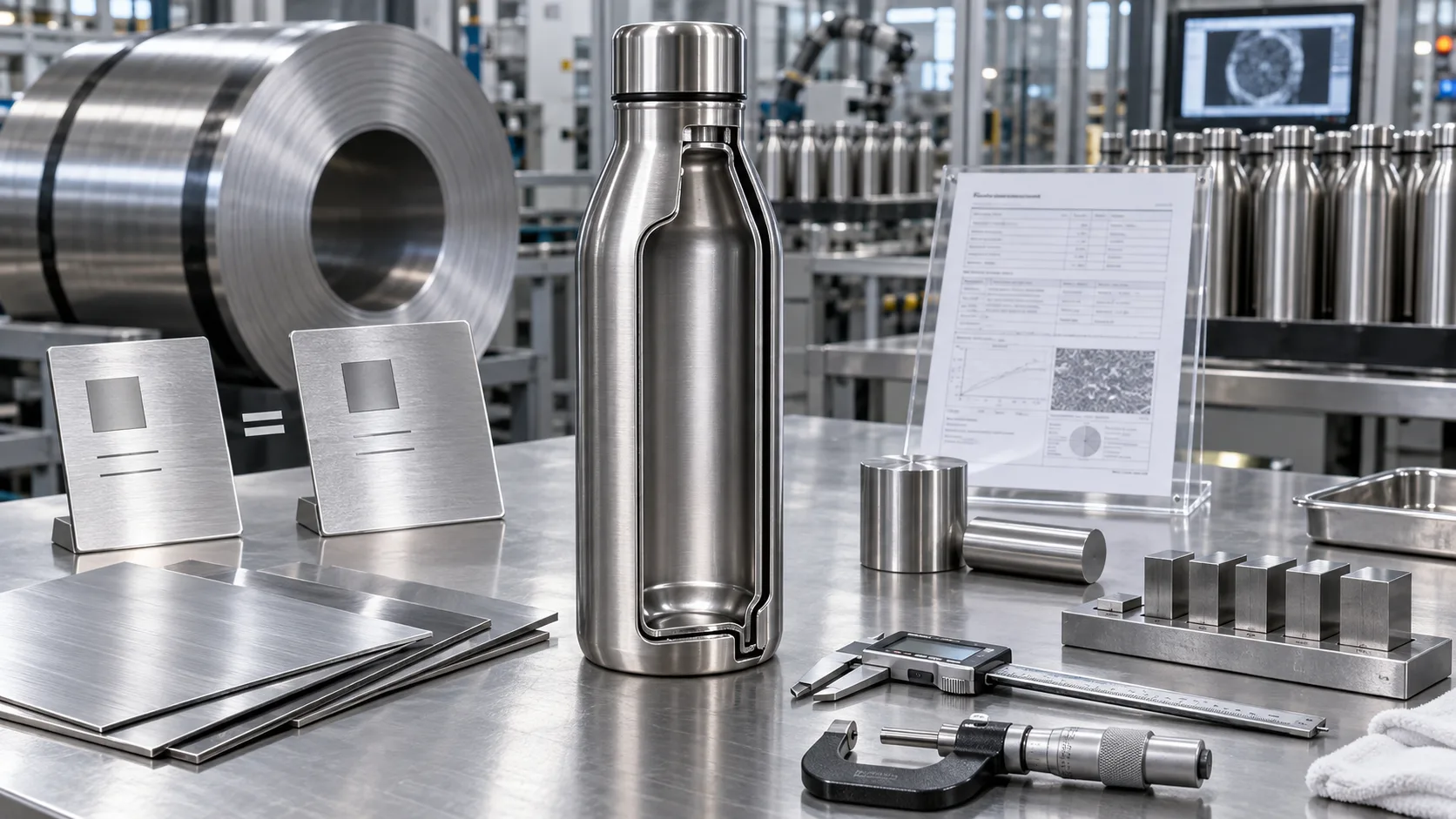
It’s easy to hear that the names mean the same thing and stop there. But from my experience helping brands source custom water bottles, I know that’s where the real questions should begin. As a manufacturer, we get this question a lot. The label on the steel is far less important than the proof behind it. Let's explore what this actually means for your business and how you can make a smarter purchasing decision.
So, Are SUS304 and 18/8 a Guarantee of Quality?
You might assume a label like "18/8 food-grade" guarantees quality. But unverified claims can lead to inferior products. You need to know what to ask to protect your brand.
No, the terms SUS304 or 18/8 alone are not a guarantee of quality. They are simply names for a specific grade of stainless steel. True quality comes from a supplier's commitment to standards and their ability to provide verifiable proof of the material's composition and safety.
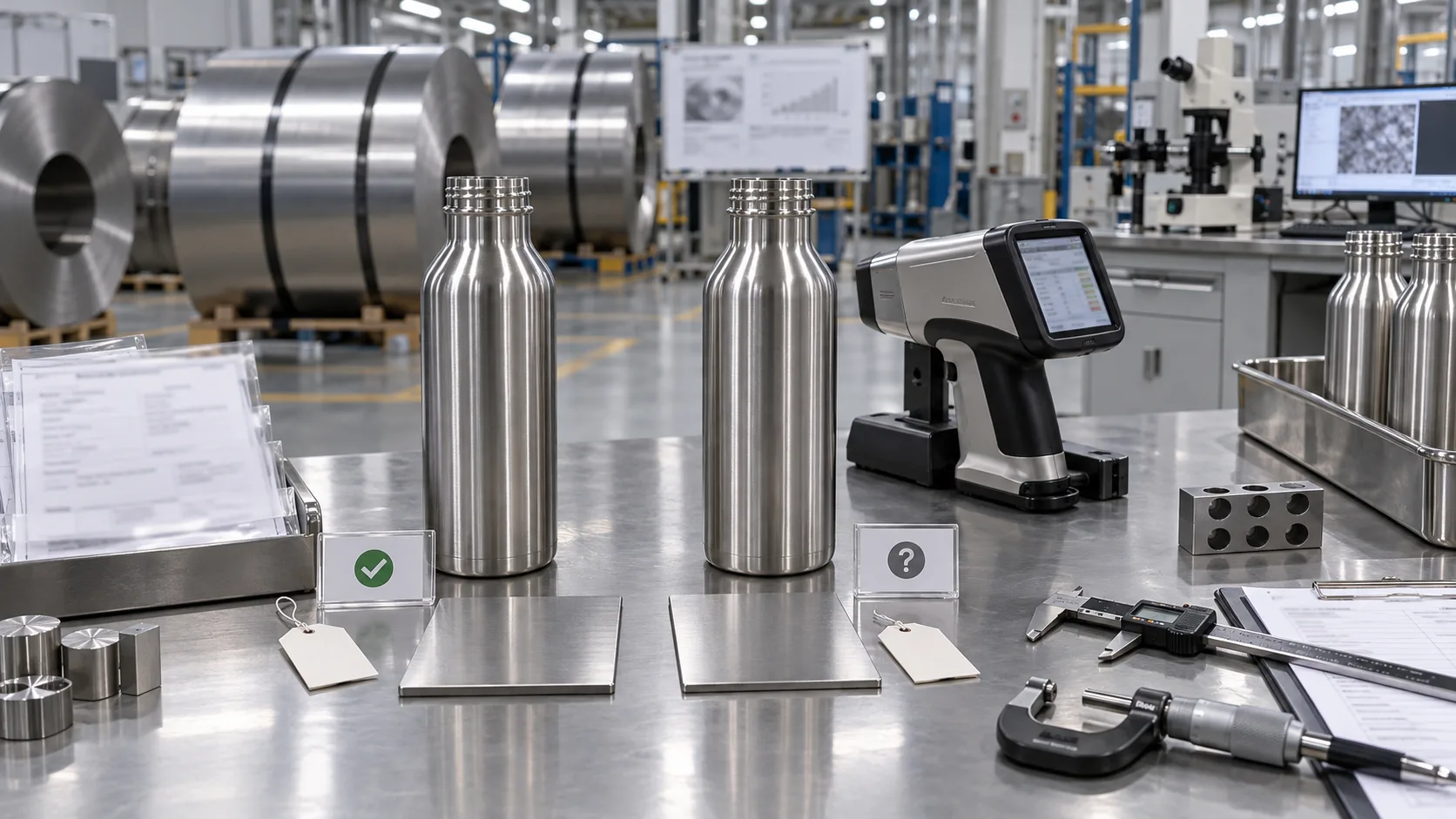
In our factory, we view these terms as the starting point of a conversation about quality, not the end. The real risk for a brand owner isn't choosing between two names for the same material. The risk is partnering with a supplier who uses the right words but can't back them up. A factory can claim to use 18/8 steel, but if they don't have strong quality control, they might be using a cheaper, lower-grade material that looks similar at first glance but won't perform over time.
The Naming Systems Explained
Let's quickly break down the names. "SUS304" comes from the Japanese Industrial Standards (JIS) and is a technical designation. "18/8" is a more common, descriptive name used in marketing. It simply refers to the primary components that make this steel so great for water bottles: 18% chromium for rust resistance and 8% nickel for durability and formability3. Both point to the same austenitic stainless steel alloy.
Why a Name Isn't Enough
The term "food-grade" itself isn't just a marketing buzzword; it means the material has been tested and proven safe for contact with food and beverages4. It won't leach harmful chemicals or rust under normal use5. A name is just a claim. Proof comes from testing. A reliable partner will be able to show you exactly how they verify that the steel they use meets these strict food-grade standards.
When Does This Naming Difference Actually Matter for My Business?
You might think the steel type is a minor sourcing detail. But choosing a supplier with unverified materials can create product recalls and damage your brand. You need to understand this risk.
The name matters most when you are sourcing for markets with strict regulations, when your product will have prolonged contact with acidic drinks, or when a supplier seems vague. In these cases, demanding verification beyond a simple name is non-negotiable for brand safety.
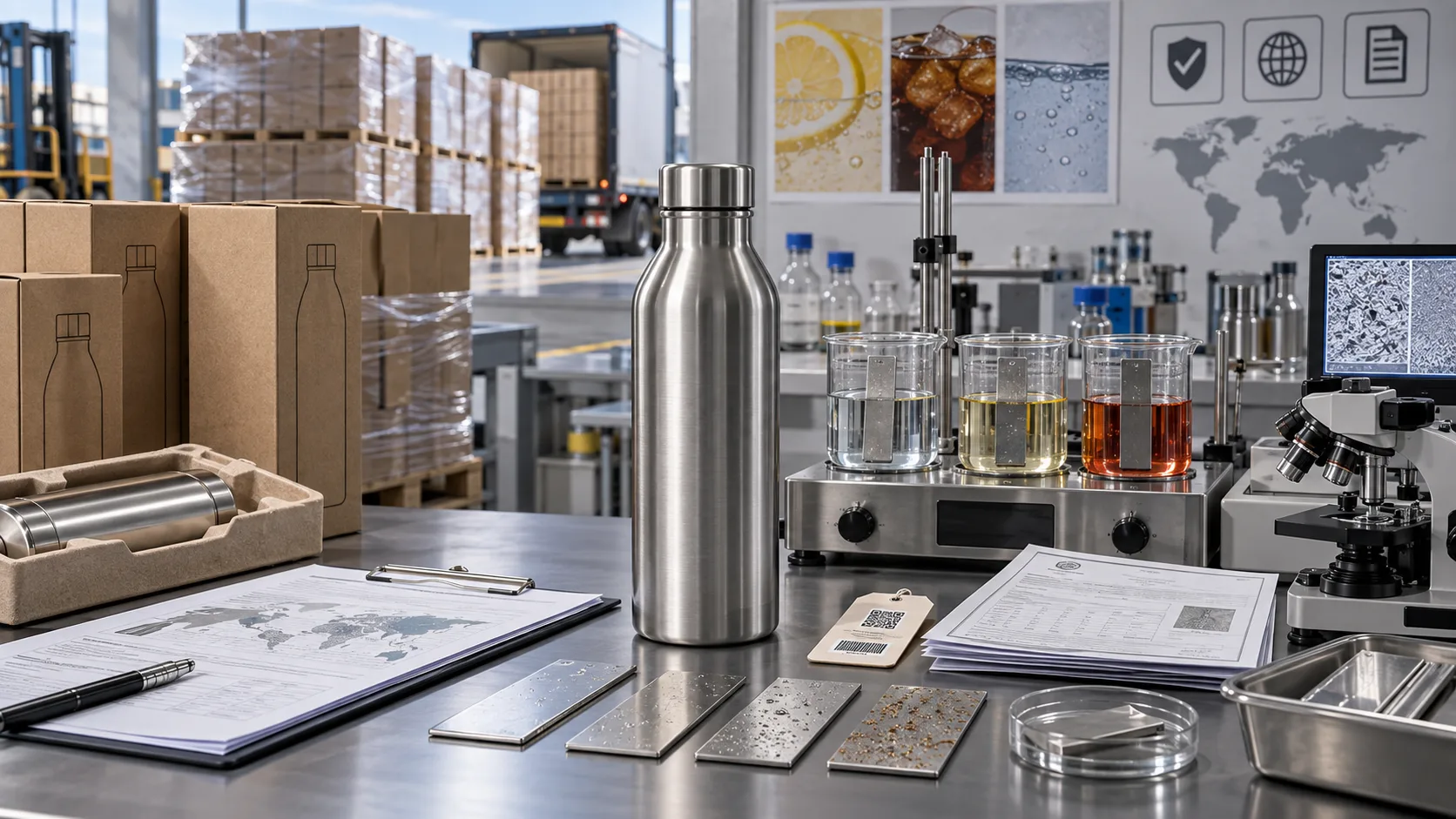
For a standard water bottle used for water, the practical difference is minimal if the material is genuinely 304-grade. However, the situation changes when the stakes are higher. I've seen firsthand how crucial this becomes for specific clients.
Sourcing for Regulated Markets
If you plan to sell in the European Union or in certain US states like California, you must meet specific legal standards. For example, Germany's LFGB regulations are some of the strictest in the world6 for food-contact materials. A supplier simply saying "we use 18/8 steel" is not enough. You will need to provide official test reports from a certified lab proving the finished product passes LFGB tests. The same goes for FDA requirements in the United States7.
High-Contact and Specialty Use Cases
I once worked with a client launching a brand of high-end coffee tumblers. They were rightly concerned about how the steel would react with acidic coffee day after day8. For products designed for acidic beverages or long-term storage, you need higher assurance that the material is stable and won't corrode or impart a metallic taste. This is where verified 304-grade steel becomes critical.
Red Flags from a Supplier
Finally, the difference matters when you are vetting a new supplier. If you ask a potential partner about their materials and they give vague answers, can't provide documentation, or get defensive, that is a major red flag. A trustworthy manufacturer is proud of their quality control and will be transparent.
How Can I Verify My Supplier's Stainless Steel Claims?
You want to trust your supplier, but you are not a materials expert. This uncertainty feels risky. Here is a simple checklist to gain confidence and ensure you get what you pay for.
Ask your supplier for three key documents: a Material Mill Certificate9 to trace the steel to its source, a third-party lab report (from SGS or TUV10) to confirm food-safety compliance, and details on their internal QC process. Reliable partners will have this documentation ready.
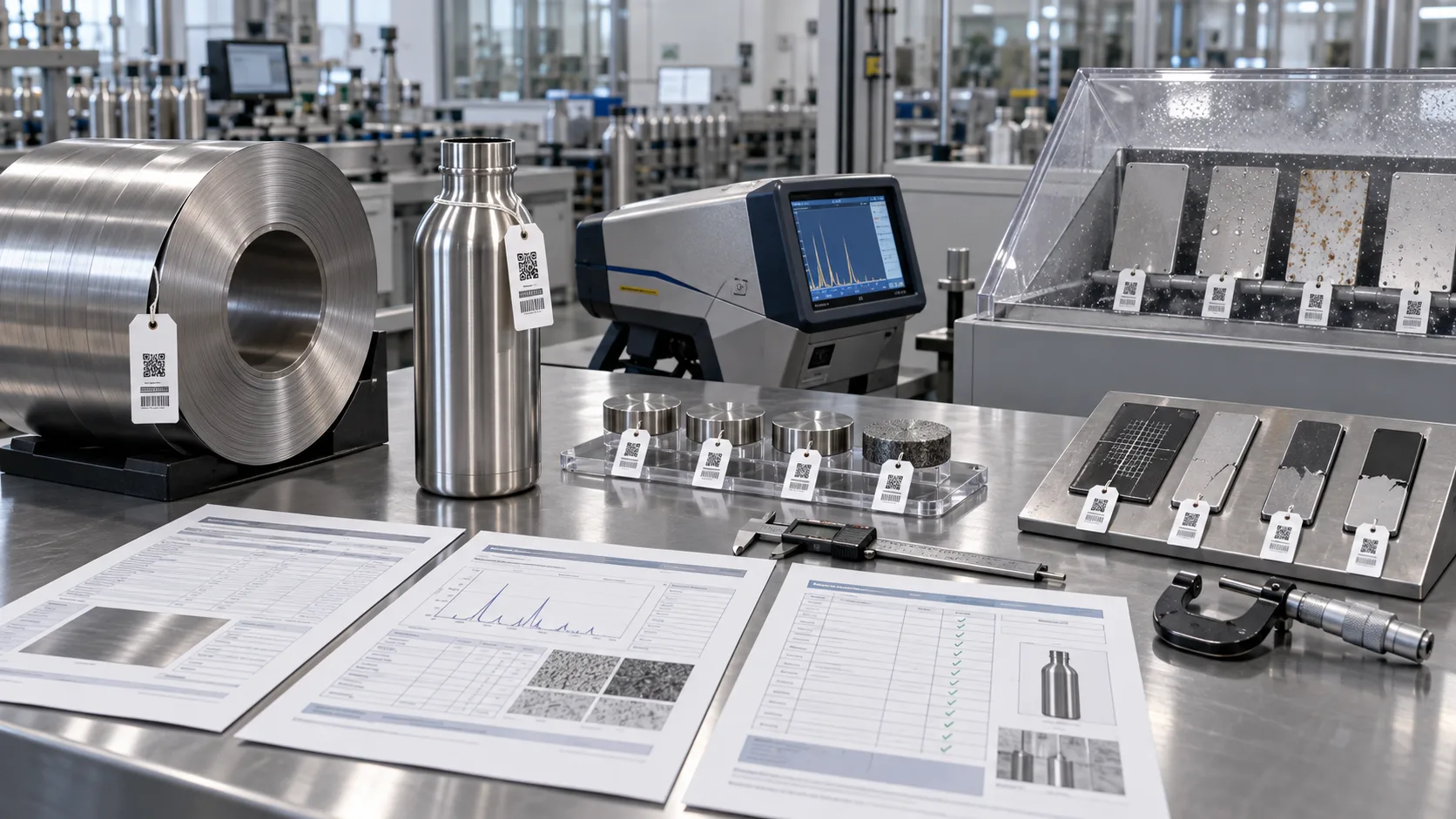
The conversation with your supplier should shift from "Do you use SUS304?" to "Can you show me the verification for your steel?" This simple change transforms you from a passive buyer into an informed partner. A good factory welcomes this question because it builds trust. It shows that you care about quality as much as they do. Here is a breakdown of the documents you should be asking for.
Your Essential Document Checklist
These documents create a chain of custody for your product's quality, from raw material to finished good.
- Material Mill Certificate: Think of this as the steel's "birth certificate." It's a document from the original steel mill that certifies the chemical composition of the raw steel coil. This proves the material was graded as 304 from the very beginning.
- Third-Party Test Report: This is an independent verification that your finished product is safe. Labs like SGS, TUV, or Intertek test the bottles for things like lead, cadmium, and other harmful elements to ensure they meet standards like FDA or LFGB.
- Internal QC Report: This shows the factory's own commitment to quality. It details the tests they perform on-site during production, such as salt spray tests for rust resistance11 or adhesion tests for coatings.
What to Look for in a Test Report
When you get a test report, don't just file it away. Look for the client's name (it should be your factory), the product description, and a clear "Pass" result for the specific standard you need (e.g., FDA 21 CFR 177.121012).
| Document | What It Proves | Why It's Important for You |
|---|---|---|
| Mill Certificate | The raw steel coil's grade and chemical composition. | Confirms the foundational material is correct before production even starts. |
| 3rd-Party Test Report | The finished product is safe and free of harmful chemicals. | Provides unbiased, independent proof that your product is compliant and safe for customers. |
| Internal QC Process | The factory has an ongoing system to check for defects and maintain standards. | Shows the supplier is proactive about quality, not just relying on a single passed test. |
Conclusion
In summary, SUS304 and 18/8 stainless steel are the same, but quality assurance is not. Focus on verification, not just terminology, to find a truly reliable manufacturing partner.
"SAE 304 stainless steel - Wikipedia", https://en.wikipedia.org/wiki/SAE_304_stainless_steel. A source from a materials science database or industry association can confirm that the Japanese Industrial Standard (JIS) SUS304 and the common name 18/8 both describe an austenitic stainless steel alloy containing approximately 18% chromium and 8% nickel, making them commercially and functionally interchangeable. Evidence role: general_support; source type: encyclopedia. Supports: The source should confirm that SUS304 (a Japanese standard) and 18/8 stainless steel (a common name) both refer to a grade of steel with a chemical composition that includes approximately 18% chromium and 8% nickel, making them functionally equivalent.. ↩
"Japanese Industrial Standards - Wikipedia", https://en.wikipedia.org/wiki/Japanese_Industrial_Standards. A source from a standards organization or a materials engineering resource can confirm that 'SUS' is the prefix used to designate stainless steel grades under the Japanese Industrial Standards (JIS), with 'SUS304' being the specific code for that grade. Evidence role: definition; source type: institution. Supports: The source should define the 'SUS' prefix as the designation for stainless steel within the Japanese Industrial Standards (JIS) system.. ↩
"Chromium--Makes Stainless Steel Stainless", https://pubs.usgs.gov/fs/2010/3089/pdf/fs2010-3089.pdf. A materials science resource can explain that chromium is the key alloying element that forms a passive, self-healing chromium oxide layer, providing stainless steel with its characteristic corrosion resistance. Nickel is added to stabilize the austenitic crystal structure at room temperature, which enhances the steel's ductility, toughness, and formability. Evidence role: mechanism; source type: education. Supports: The source should explain the metallurgical roles of chromium and nickel in stainless steel.. ↩
"[PDF] Stainless Steel (SS) Safety Profile - FDA", https://www.fda.gov/media/165146/download. A source from the U.S. Food and Drug Administration (FDA) can define the criteria for food contact materials, which are substances intended for use in articles that come into contact with food. These materials must be of a purity suitable for their intended use and must not impart any harmful substances to the food. Evidence role: definition; source type: government. Supports: The source should define the requirements for a material to be considered safe for food contact in the United States.. ↩
"Stainless Steel Leaches Nickel and Chromium into Foods During ...", https://pmc.ncbi.nlm.nih.gov/articles/PMC4284091/. Scientific studies and risk assessments from public health institutions have shown that under normal use conditions, high-quality stainless steels like grade 304 exhibit very low levels of metal ion migration (leaching) into food, well below the tolerable daily intake limits set by health authorities. Evidence role: statistic; source type: research. Supports: The source should provide data or an expert consensus on the low potential for leaching from 304-grade stainless steel.. Scope note: The support is for 'very low levels' of migration, not an absolute absence of it, and is dependent on the material meeting quality standards. ↩
"Food Packaging & Other Substances that Come in Contact with Food", https://www.fda.gov/food/food-ingredients-packaging/food-packaging-other-substances-come-contact-food-information-consumers. A source from a third-party testing agency or a European regulatory body can explain that Germany's Food and Feed Code (LFGB) imposes stringent requirements on food-contact materials, including tests for any migration of substances that could pose a health risk or cause a change in the food's taste or odor. Evidence role: general_support; source type: institution. Supports: The source should describe the requirements of Germany's LFGB, particularly its testing for sensory changes and substance migration.. Scope note: Whether it is 'strictest in the world' is a subjective judgment, but the source can support the claim that the regulations are notably comprehensive and strict. ↩
"Regulatory Status of Components of a Food Contact Material - FDA", https://www.fda.gov/food/packaging-food-contact-substances-fcs/determining-regulatory-status-components-food-contact-material. The U.S. Food and Drug Administration specifies requirements for food contact surfaces in the Code of Federal Regulations. Stainless steel is generally recognized as safe (GRAS) for food contact use, provided it is of a grade and finish appropriate for the intended application. Evidence role: case_reference; source type: government. Supports: The source should be the official U.S. government regulation governing materials used for food contact.. ↩
"Study of the Corrosion Behavior of Stainless Steel in Food Industry", https://pmc.ncbi.nlm.nih.gov/articles/PMC11012613/. A materials science paper or technical brief can explain that while 304-grade stainless steel is highly resistant to corrosion from many food acids, prolonged contact with certain acidic and chloride-containing solutions can potentially lead to localized pitting corrosion if the protective passive layer is compromised. Evidence role: mechanism; source type: paper. Supports: The source should explain how acidic solutions can affect the passive layer of stainless steel.. ↩
"Mill test report - Wikipedia", https://en.wikipedia.org/wiki/Mill_test_report. A source from a steel industry association or quality management resource can define a Material Mill Certificate, also known as a Mill Test Report (MTR), as a quality assurance document that certifies a material's chemical and physical properties, linking the product to a specific heat (batch) from the steel mill. Evidence role: definition; source type: other. Supports: The source should define what a Material Mill Certificate is and what information it contains.. ↩
"Third-Party Testing Laboratory Accreditation & Small Entity ...", https://www.cpsc.gov/Business--Manufacturing/Testing-Certification/Lab-Accreditation. A source from an international inspection and certification company, such as SGS or TÜV Rheinland, can describe their services for testing consumer products against various international standards for food-contact materials, including those from the FDA and LFGB. Evidence role: case_reference; source type: institution. Supports: The source should describe the services offered by these international testing and certification bodies.. Scope note: This source would provide an example of the services offered by such companies, not an endorsement of them. ↩
"Accelerated Test Method for Corrosion Protective Coatings Project", https://techport.nasa.gov/projects/14798. A source from a standards organization like ASTM International can describe the standard practice for operating a salt spray (fog) apparatus (e.g., ASTM B117). This is a common accelerated corrosion test used in manufacturing to evaluate the relative corrosion resistance of materials and coatings in a corrosive environment. Evidence role: definition; source type: research. Supports: The source should define the salt spray test and its application.. ↩
"21 CFR 177.1210 -- Closures with sealing gaskets for food containers.", https://www.ecfr.gov/current/title-21/chapter-I/subchapter-B/part-177/subpart-B/section-177.1210. A source from the U.S. Code of Federal Regulations, specifically Title 21, Part 177, Section 1210, can provide the specific regulations for 'Closures with sealing gaskets for food containers.' While this specific section applies to polymers and gaskets, other sections within Title 21 cover a wide range of food-contact materials. Evidence role: case_reference; source type: government. Supports: The source should be the official text of the regulation mentioned.. Scope note: The cited regulation is specific to closures and gaskets, not stainless steel itself, but serves as an example of the detailed nature of FDA food-contact regulations. ↩