Striving to create a premium drinkware line, you see the success of major brands and wonder if their quality is built on a secret, unattainable manufacturing process. The high retail price of a Hydro Flask water bottle can create the illusion of a complex, proprietary technology that’s out of reach for new brands. The good news is that understanding how Hydro Flask water bottles are made reveals a process that is more about precision and consistency than secret formulas.
Hydro Flask water bottles are made using a standard, industry-wide process called double-wall vacuum insulation1. This involves forming two separate stainless steel bottles (an inner and an outer wall), welding them together at the rim, sealing them in a vacuum chamber to remove the air between the walls, and then applying a durable surface finish like powder coating2.
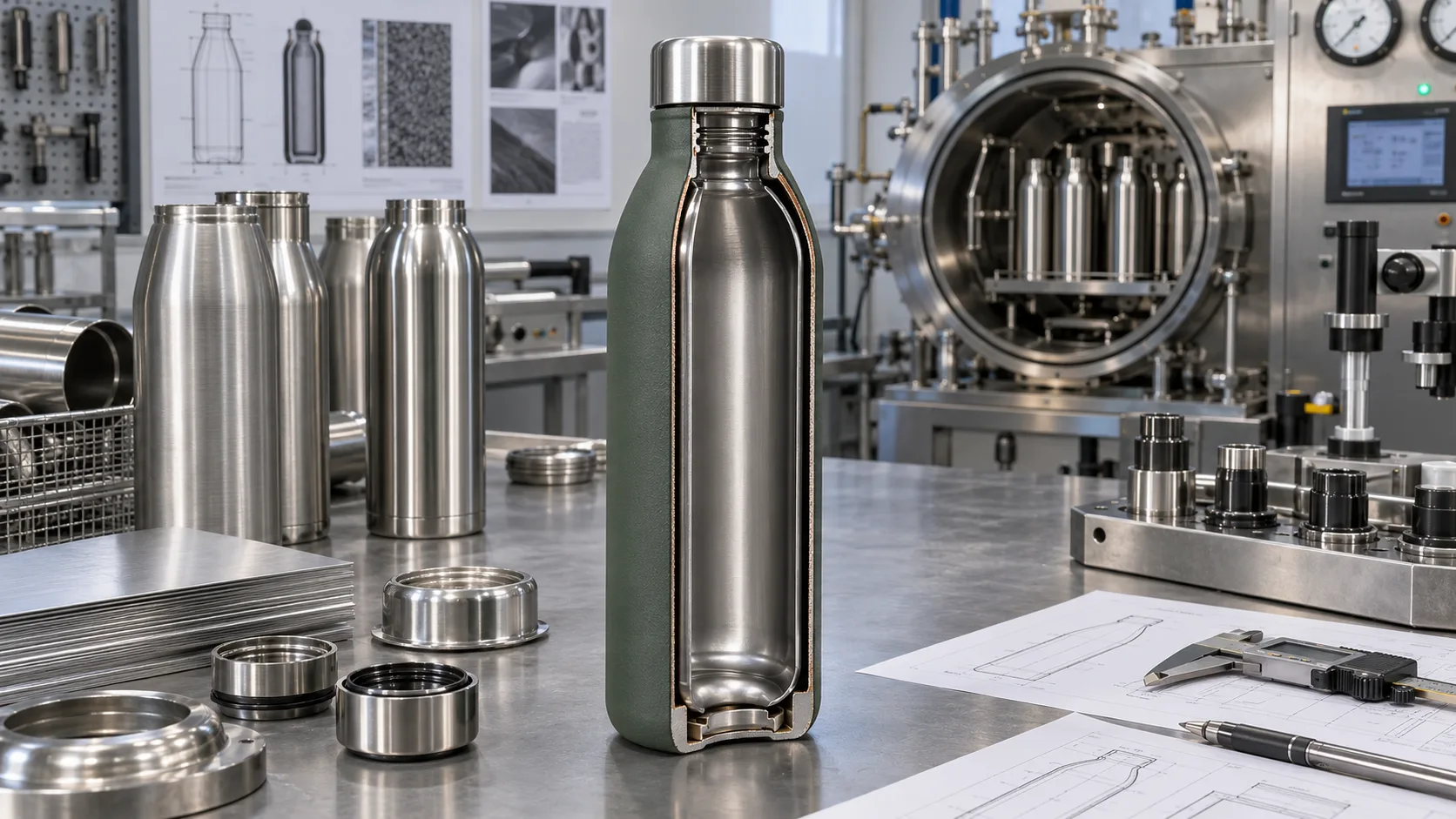
Now that you know the fundamental method isn't a trade secret, you're likely wondering where the real value and quality come from. The difference between an average insulated bottle and a premium one lies in the details of execution, material control, and rigorous testing—all factors you can manage with the right manufacturing partner. Let's break down the process step-by-step.
What Are the Core Manufacturing Steps for Making a Bottle Like a Hydro Flask?
You want to develop a product with similar performance, but the production line seems like a black box. You're concerned about overlooking a critical step that could lead to quality issues down the road. The solution is to visualize the journey from raw steel to finished product.
The manufacturing process for a high-quality insulated bottle is a sequence of distinct stages. Each stage presents opportunities for both excellence and failure, making process control paramount.
From Steel Tube to Finished Bottle
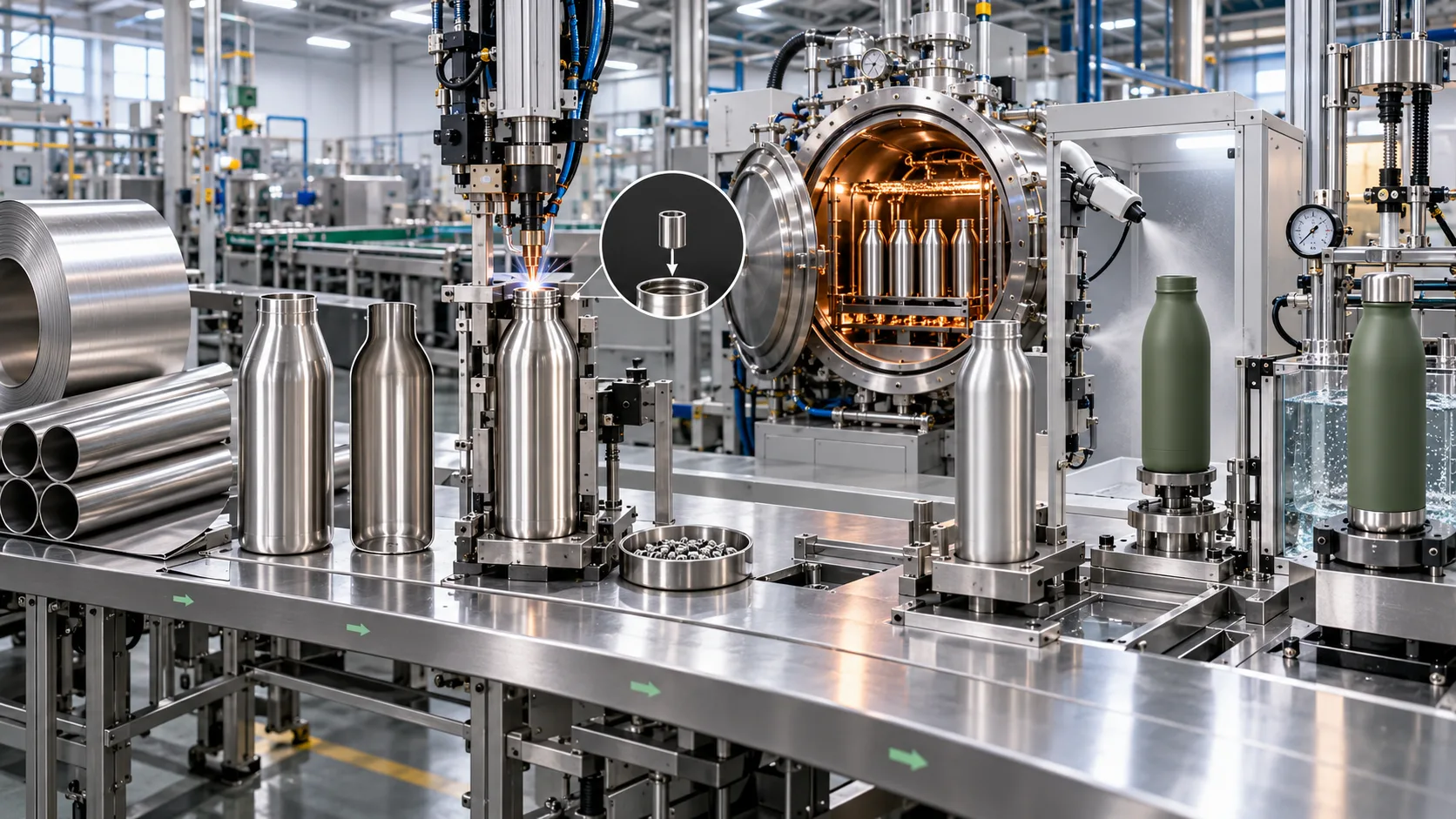
The journey of how Hydro Flask water bottles are made—and how any premium insulated bottle is produced—is a testament to modern metalworking and quality control. In my experience overseeing these projects, a failure at any one of these stages can compromise the final product. Here’s a closer look at the key steps:
1. Forming the Inner and Outer Bottles
The process starts with raw materials, typically stainless steel pipes or sheets, almost always Grade 304 (also known as 18/8 stainless steel)3. This food-grade material is chosen for its excellent corrosion resistance and durability.
- Pipe-Extrusion Method: A common technique where a stainless steel pipe is cut to length. A series of high-pressure water jets or mechanical presses then expand and shape the pipe into the form of the inner and outer bottles. This method is efficient for standard cylindrical shapes.
- Deep Drawing Method: This involves stamping circular steel sheets ("blanks") through a series of dies to "draw" them into a cup shape. This is better for more complex or non-uniform bottle shapes.
At this stage, the bottles are just two separate steel shells—one slightly smaller (the inner) to fit inside the other (the outer).
2. Welding, Assembly, and Getter Placement
The two shells are combined. The inner and outer bottles are fitted together, and their top rims are precisely aligned and welded. This weld must be flawless; any pinhole or crack will cause the bottle to lose its vacuum later, rendering the insulation useless.
Before the bottom is sealed, a small, absorbent pellet called a "getter"4 is often placed in the space between the walls. This is a crucial but often overlooked component. Its job is to absorb any stray gas molecules (like hydrogen) that might remain after the vacuum process or slowly outgas from the steel over time, helping to maintain the integrity of the vacuum for years.
3. Creating the Vacuum
This is the heart of the insulation technology. Batches of welded bottles are placed inside a large vacuum furnace. The furnace heats the bottles to a high temperature (typically over 500°C) while powerful pumps remove the air from the space between the two walls.
The combination of high heat and high vacuum helps remove virtually all air and moisture molecules. After the pumping cycle, the small opening at the bottom of the outer bottle is sealed, trapping the vacuum inside. This lack of air molecules is what dramatically reduces heat transfer via convection and conduction5.
4. Surface Finishing and Coating
Once the raw, insulated "blank" is created and has passed an initial insulation test, it moves to the finishing department.
- Polishing: The exterior is polished to create a smooth surface for coating.
- Coating Application: For a product like a Hydro Flask, this is almost always powder coating. A dry, colored powder is electrostatically applied to the bottle's surface. The bottle is then baked in an oven, causing the powder to melt and fuse into a single, durable, and uniform layer. This is far more durable and chip-resistant than conventional liquid paint.
5. Printing, Assembly, and Final QC
The final steps involve branding and assembly. Logos are applied via screen printing, laser engraving, or other methods. The plastic or steel cap, along with any silicone seals, is screwed on.
A final, rigorous quality control check is performed. This includes visual inspection for cosmetic defects, a leak test for the cap and seals, and often a final insulation performance test on a sample percentage of the batch.
Is Hydro Flask's "TempShield™" a Unique Insulation Technology?
Brands often trademark their technology, leading you to believe they’ve invented something unique and proprietary. You might worry that without access to "TempShield™," your product will be inherently inferior. This fear can cause you to overspend or abandon a project, assuming you can't compete.
In short, no. "TempShield™ Insulation" is a brand name for the standard double-wall vacuum insulation process6, executed to a high and consistent standard. It is not a fundamentally different or proprietary technology that other competent manufacturers cannot replicate.
Deconstructing Brand Names vs. Manufacturing Reality
When I consult with brand managers developing their first drinkware line, one of the first things we do is demystify marketing terminology. Brands like Hydro Flask, YETI (with their "Over-Engineering" mantra), and Stanley have brilliantly built narratives around their products. "TempShield™" is a perfect example of effective branding for a well-established manufacturing process.
The "magic" isn't in a secret material or a patented step; it's in the quality and consistency of execution. Here’s what truly determines insulation performance:
-
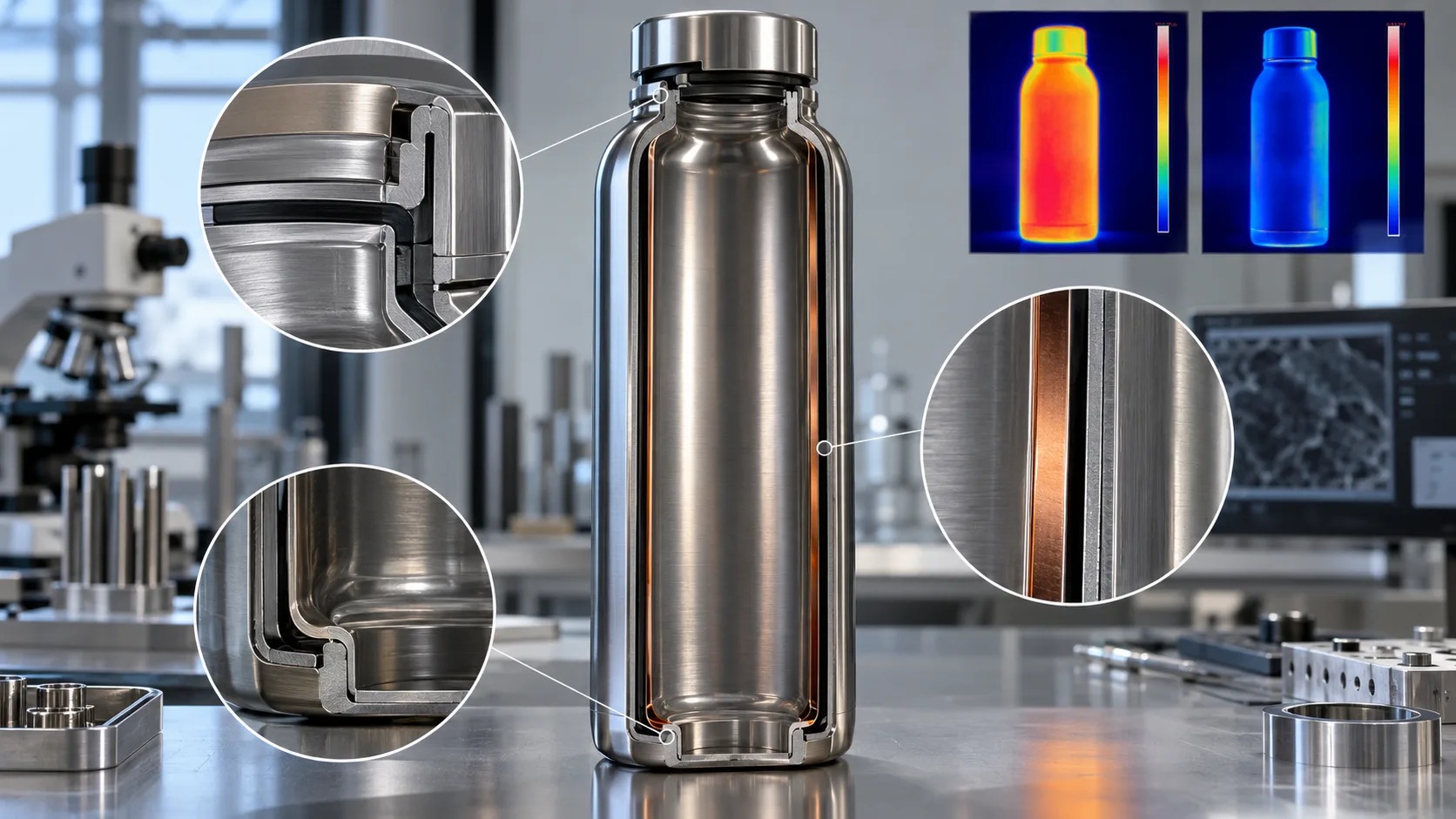
The Quality of the Vacuum: The single most important factor. The fewer air molecules left between the walls, the less heat can be transferred. A "hard" vacuum (a very low pressure) provides superior insulation. Low-cost factories may use less powerful pumps or shorter vacuum cycles, resulting in a "softer" vacuum and poorer performance. In our projects, we specify vacuum levels and testing protocols to ensure consistency.
-
The Role of a Copper Lining: Some high-performance bottles include a thin layer of copper plating on the outside of the inner wall. This layer helps to reduce heat transfer via radiation7. While effective, the impact can be marginal compared to the quality of the vacuum itself. It's a feature that adds cost, and its performance benefits should be weighed against that. When a client asks for "Hydro Flask-level performance," we discuss whether the target use case justifies the added cost of a copper layer.
-
Weld Integrity: As mentioned, the weld at the rim is a critical point of failure. A microscopic flaw can allow air to slowly leak in over weeks or months, causing the bottle to lose its insulating properties. This is why experienced manufacturers use advanced welding techniques and conduct pressure decay tests.
-
Material and Construction: The thickness of the stainless steel walls and the design of the base and rim all play a role in durability and, to a lesser extent, thermal performance.
So, when a brand claims a special name for their insulation, what they are really claiming is that they have mastered the variables of the standard process. They maintain a high-quality vacuum, ensure weld integrity, and use quality materials on every single unit. That consistency is their true competitive advantage, not a secret technology.
Where Do Quality Issues Occur When Making Bottles Like a Hydro Flask?
Knowing the manufacturing steps is one thing, but anticipating where things will go wrong is another. You're worried that you'll approve a perfect pre-production sample, only to receive a bulk order plagued with hidden defects. This is a common and legitimate fear for anyone sourcing products overseas.
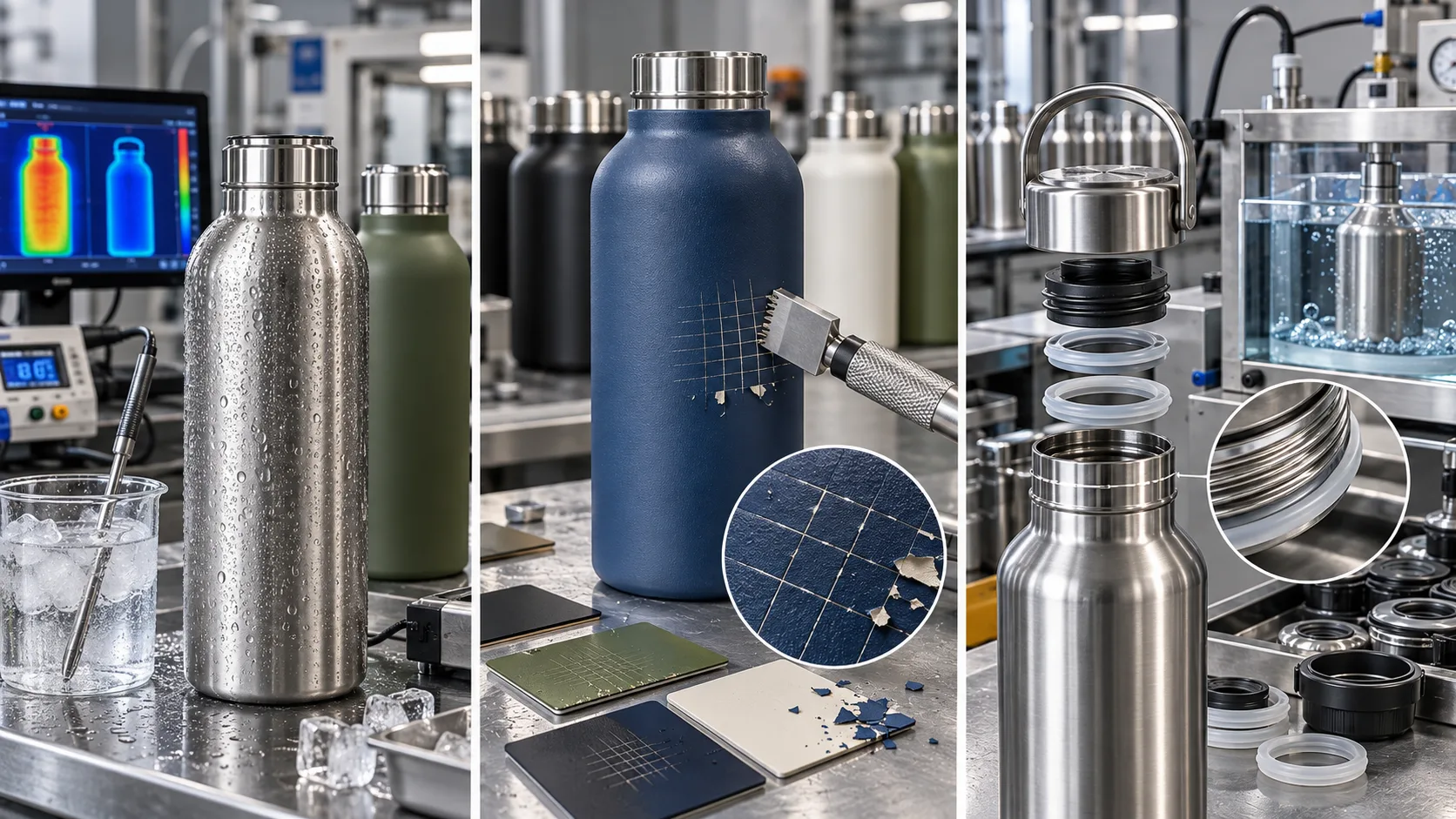
Most quality failures in vacuum insulated bottle production cluster around three key areas: loss of vacuum (insulation failure), defects in the surface coating, and poor tolerances in the cap and threads, leading to leaks.
Dive Deeper: A Manufacturer's Guide to Common Failure Points
Over the years, I've seen firsthand how small deviations in process can lead to large-scale quality problems. When a brand partner comes to us after a bad experience with another supplier, the issues almost always fall into these categories. Understanding them is your best defense.
1. Vacuum Loss and Insulation Failures
This is the most critical and frustrating defect. A bottle that doesn't insulate is just an expensive, heavy water bottle.
- The "Sweat" Test8: The simplest way to spot a failure. Fill the bottle with ice water. If the vacuum is compromised, the outside of the bottle will become cold and start to "sweat" (condense moisture) within minutes. Premium manufacturers perform this test (or a thermal imaging equivalent) on 100% of units after the vacuum stage.
- Causes:
- Poor Welds: A microscopic crack in the rim weld is the most common culprit.
- Improper Sealing: The final seal at the bottom of the bottle fails.
- Material Impurities: In rare cases, impurities in the steel can lead to outgassing that ruins the vacuum over time.
- Prevention: Specifying 100% insulation testing in your quality plan is non-negotiable. Don't rely on random sampling for this critical function.
2. Surface Coating and Cosmetic Defects
This is the most visible category of defects. While it may not affect performance, it directly impacts the customer's perception of quality.
- Powder Coating Issues: Adhesion is key. If the bottle surface isn't properly prepared or the powder isn't cured at the right temperature for the right amount of time, it can chip, flake, or peel easily. We use a "cross-hatch adhesion test" where we score the coating and apply strong tape to see if any of it pulls off.
- Printing Flaws: Smudged logos, incorrect colors, or misaligned prints are common signs of a rushed job or a supplier cutting corners on quality control.
| Defect Type | Common Cause | How to Test & Prevent |
|---|---|---|
| Powder Coat Chipping | Improper surface prep; incorrect curing temp/time | Specify cross-hatch adhesion test (e.g., ASTM D3359)9 |
| Uneven Color/Texture | Inconsistent powder application; oven temperature variance | Define an acceptable color range (using Pantone/RAL) and finish |
| Logo Smudging | Poor ink curing; contaminated printing screens | Specify ink type and require abrasion resistance test on prints |
| Dents and Scratches | Poor handling between manufacturing stages | Implement clear handling protocols and visual inspection points |
3. Leaks and Assembly Tolerances
A premium bottle must be leak-proof. This depends on the precise fit between the bottle threads, the cap, and the silicone gasket.
- Thread Mismatch: If the molds for the bottle threads and the cap are not perfectly matched, the cap can be difficult to screw on, feel "gritty," or fail to seal properly.
- Gasket Issues: Using the wrong grade of silicone, or a gasket that is too hard, too soft, or improperly sized can lead to leaks, especially with hot or carbonated beverages.
When we develop a custom bottle, we pay obsessive attention to the cap and thread design. It's an area where a fraction of a millimeter can be the difference between a reliable seal and a customer's ruined laptop bag.
Frequently Asked Questions
What stainless steel grade is used for Hydro Flask style bottles?
The industry standard is Grade 304, also known as 18/8 stainless steel, for all food-contact surfaces. This denotes a composition of 18% chromium and 8% nickel, providing excellent resistance to rust and corrosion. It is the same material used in high-quality kitchen equipment and is considered very safe.
Is powder coating better than painting for water bottles?
Yes, for durability, powder coating is significantly better. It creates a much thicker, harder, and more chip-resistant finish than conventional liquid paint. It also has environmental benefits as it releases fewer volatile organic compounds (VOCs)10 during application. While paint can offer more specialized finishes, powder coating provides the best balance of aesthetics and toughness for an everyday-use product.
How much does it cost to manufacture a bottle like a Hydro Flask?
The unit cost depends heavily on order quantity, wall thickness, coating complexity, cap design, and the level of quality control specified. As a rough guide, the factory cost is only a small fraction of the retail price. The final price tag you see in stores accounts for the brand's marketing, design, R&D, distribution, retail markup, and profit margin, not just the manufacturing itself.
Can my brand make a 100% identical copy of a Hydro Flask?
No, and you shouldn't try. Attempting to create an exact replica would likely infringe on Hydro Flask's design patents and trademarks11. The goal is not to copy, but to understand the principles of how Hydro Flask water bottles are made and apply them to create your own unique, high-performance product that resonates with your specific market.
Conclusion
Understanding how Hydro Flask water bottles are made demystifies the product and empowers your brand. The process is not a secret art but a standardized science, where the real differentiator is an obsession with consistency and quality control. The premium value comes from executing each step—from welding to vacuum sealing to coating—to the highest possible standard, batch after batch. For brand owners and product managers, the key takeaway is to shift focus from searching for a "secret ingredient" to rigorously managing process variables. By specifying testing protocols, understanding material trade-offs, and partnering with a manufacturer who prioritizes transparency and quality engineering, you can develop a drinkware line that delivers premium performance and builds lasting brand trust.
If you are a brand founder, product manager, or sourcing professional looking to develop a high-quality custom drinkware line and need a manufacturing partner who understands these critical details, let's connect. We can help you navigate these decisions and build a product that stands for quality.
"Vacuum flask", https://en.wikipedia.org/wiki/Vacuum_flask. The principle of using a vacuum between two walls to provide thermal insulation, known as a vacuum flask or Dewar flask, was invented by Scottish scientist Sir James Dewar in 1892 and is not a recent or proprietary technology. Evidence role: historical_context; source type: encyclopedia. Supports: The source should describe the invention and principle of the vacuum flask, establishing it as a well-known technology.. ↩
"Electrostatic spray-assisted vapour deposition", https://en.wikipedia.org/wiki/Electrostatic_spray-assisted_vapour_deposition. Powder coating is a dry finishing process where a thermoplastic or thermoset powder is applied electrostatically to a substrate and then cured with heat, forming a hard finish that is common on metal products like appliances, automotive parts, and consumer goods. Evidence role: definition; source type: institution. Supports: The source should describe the powder coating process and list consumer metal goods as a typical application.. ↩
"SAE 304 stainless steel", https://en.wikipedia.org/wiki/SAE_304_stainless_steel. Sources from materials science institutions and industry associations confirm that Grade 304 stainless steel, containing 18% chromium and 8% nickel, is a common choice for food processing equipment and cookware due to its excellent corrosion resistance and formability. Evidence role: definition; source type: institution. Supports: The source should define 304/18-8 stainless steel and confirm its widespread use in food and beverage applications due to its corrosion resistance.. ↩
"Getter", https://en.wikipedia.org/wiki/Getter. Getters are chemically reactive materials placed inside sealed vacuum systems to capture residual gas molecules through chemical combination or adsorption, thereby maintaining or improving the quality of the vacuum over time. Evidence role: mechanism; source type: education. Supports: The source should explain the function of getters in high-vacuum applications.. ↩
"Thermal insulation", https://en.wikipedia.org/wiki/Thermal_insulation. A vacuum inhibits heat transfer by conduction and convection, as these two mechanisms require a medium of molecules to propagate energy. In the near-absence of molecules, they are largely eliminated, leaving thermal radiation as the primary mode of heat transfer. Evidence role: mechanism; source type: encyclopedia. Supports: The source should explain the three modes of heat transfer and why a vacuum is effective at preventing conduction and convection.. ↩
"Patent AT-E401382-T1: [Translated] COMPOSITION FOR ...", https://healthdata.gov/NIH/Patent-AT-E401382-T1-Translated-COMPOSITION-FOR-PR/5656-jtcc. Hydro Flask's own marketing materials describe TempShield™ as their unique double-wall vacuum insulation. Publicly available information and patent searches do not indicate a fundamental technology beyond the industry-standard method of creating a vacuum between two stainless steel walls. Evidence role: general_support; source type: other. Supports: The source, likely the brand's own website or marketing materials, should describe TempShield™ in terms of double-wall vacuum insulation.. Scope note: This interpretation is based on the absence of evidence for a proprietary mechanism, rather than direct proof from the company stating it is a standard process. ↩
"Parker Solar Probe's Heat Shield Enters Thermal Vacuum ...", https://parkersolarprobe.jhuapl.edu/News-Center/Show-Article.php?articleID=64. In a vacuum, where conduction and convection are minimized, thermal radiation is a significant mode of heat transfer. A thin coating of a low-emissivity material, such as copper, on one of the internal surfaces can reflect thermal radiation, further improving the insulation performance of the flask. Evidence role: mechanism; source type: paper. Supports: The source should explain how low-emissivity coatings reduce radiative heat transfer.. ↩
"Testing Insulated Bottles and Playing with Thermometers", https://justinsimoni.com/testing-insulated-bottles-and-playing-with-thermometers/. Consumer advice columns and manufacturer troubleshooting guides widely recognize that condensation (or 'sweating') on the exterior of a vacuum-insulated vessel when filled with a cold liquid is a definitive sign that the vacuum has been compromised and the insulation has failed. Evidence role: case_reference; source type: other. Supports: The source should confirm that condensation on the exterior of a vacuum flask is a sign of insulation failure.. ↩
"Paint adhesion testing", https://en.wikipedia.org/wiki/Paint_adhesion_testing. ASTM D3359 is a standard test method from ASTM International for measuring the adhesion of coatings to substrates by applying and removing pressure-sensitive tape over cuts made in the film. It is widely used to assess the quality of paint and powder coatings. Evidence role: definition; source type: institution. Supports: The source should describe the ASTM D3359 standard and its purpose.. ↩
"National Volatile Organic Compounds Emission Standards", https://www.epa.gov/stationary-sources-air-pollution/architectural-coatings-national-volatile-organic-compounds. According to environmental protection agencies, powder coatings are considered a low-polluting technology because they release negligible, if any, volatile organic compounds (VOCs), unlike many solvent-based liquid paints which release VOCs during application and curing. Evidence role: statistic; source type: government. Supports: The source should confirm that powder coating is a low-VOC or zero-VOC process compared to many liquid paints.. ↩
"Design patent application guide", https://www.uspto.gov/patents/basics/apply/design-patent. According to intellectual property offices like the U.S. Patent and Trademark Office (USPTO), a design patent protects a product's unique ornamental appearance, while a trademark protects brand names, logos, and other source identifiers. Copying these protected elements can constitute infringement. Evidence role: definition; source type: government. Supports: The source should define design patents and trademarks and what they protect.. Scope note: This information provides a general definition of intellectual property rights and does not constitute a legal analysis of any specific product. ↩