
Struggling to choose between an RTIC and a Hydro Flask? Both promise great performance, but the right choice is not always obvious. Let's find the perfect bottle for you.
For most people, RTIC offers comparable performance to a Hydro Flask at a lower price1, making it a better value. However, Hydro Flask provides more color options and a stronger brand identity, which can be important for style-conscious users and as a premium gift.
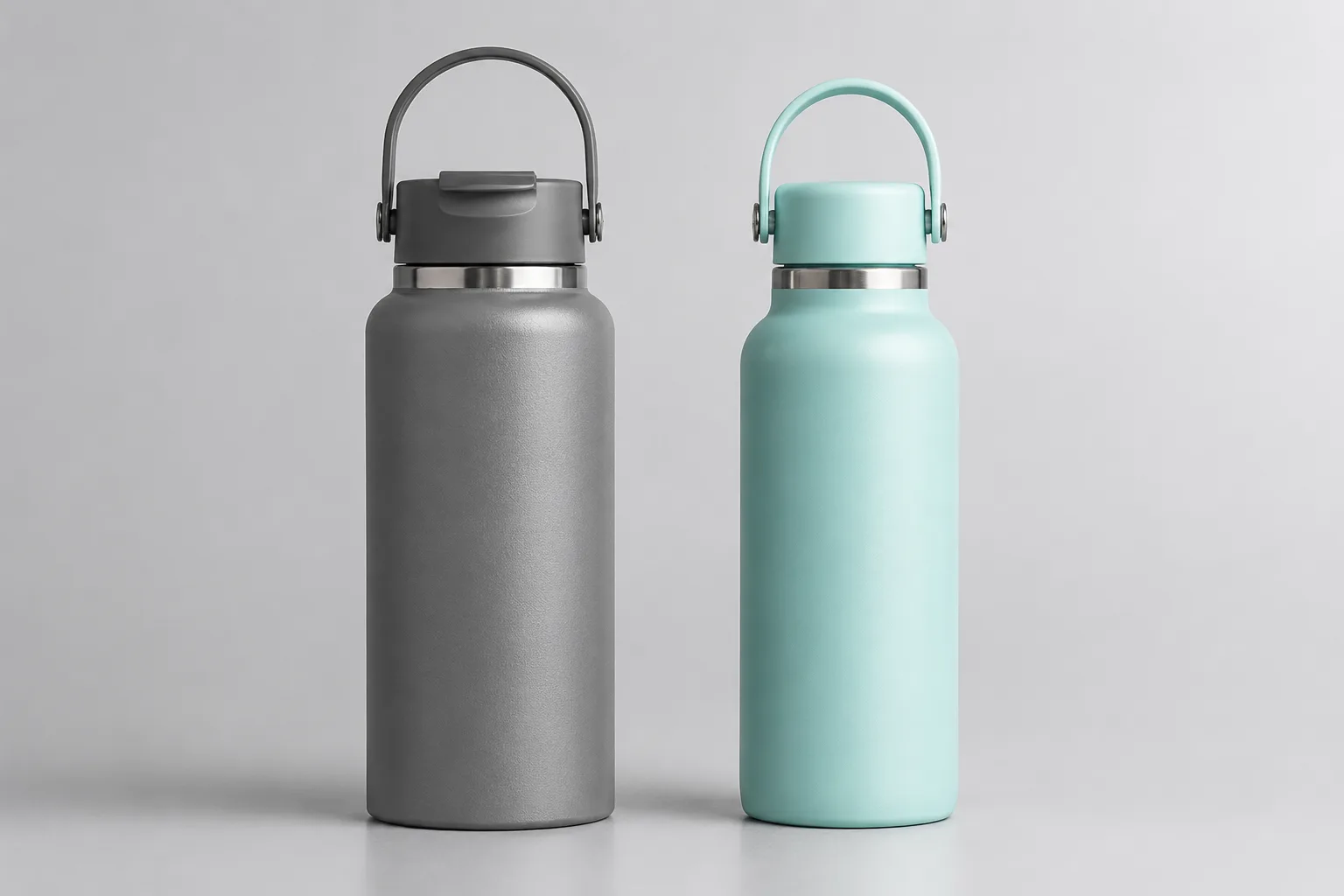
%A side-by-side comparison of an RTIC water bottle and a Hydro Flask water bottle
As someone who works in the water bottle manufacturing industry, I get this question a lot. My clients, from brand owners to corporate gift buyers, are always analyzing the market. They are not just looking at a bottle; they are looking at materials, brand strategy, and value. Let's break down these two giants from an insider's perspective, just like I would with a client looking to develop their own product line. We will go beyond the simple user reviews and look at what really makes these bottles different from a manufacturing and branding standpoint.
How Do Their Materials and Construction Compare?
Worried about durability and safety? The materials inside your bottle matter. Choosing the wrong one can lead to poor performance and even rust. Let's look at what is inside.
Both RTIC and Hydro Flask use high-quality 18/8 food-grade stainless steel2 and double-wall vacuum insulation3. Their construction quality is very similar, offering excellent durability. The main differences are often in the finish and specific lid designs, not the core bottle material.
%A close-up of the stainless steel interior of a water bottle
From a manufacturing standpoint, the core of both bottles is almost identical. When my clients want to create a high-performance bottle, we start with the same foundation.
The Steel Itself
Both brands use what is called 18/8 food-grade stainless steel. This name means it is made with 18% chromium and 8% nickel. This specific alloy is the industry standard4 because it is extremely resistant to rust and corrosion, and it does not transfer any metallic taste to your water. For a manufacturer, sourcing high-quality, certified 18/8 steel is the first step to ensuring a reliable product.
The Construction Method
The "magic" of temperature retention comes from double-wall vacuum insulation. We take two stainless steel walls and weld them together, usually at the top rim. Then, all the air is pumped out from the space between the walls, creating a vacuum. Since there is no air, there is nothing to transfer heat. This is why the outside of the bottle does not get cold or sweat with an icy drink inside. The quality of the weld and the completeness of the vacuum are critical5. Both RTIC and Hydro Flask have mastered this process, which is why their performance is so similar.
| Feature | RTIC | Hydro Flask | Manufacturer's Note |
|---|---|---|---|
| Material | 18/8 Stainless Steel | 18/8 Stainless Steel | Industry standard for quality and safety. |
| Insulation | Double-Wall Vacuum | Double-Wall Vacuum | The key to temperature retention. |
| Coating | Standard Powder Coat | Proprietary Powder Coat | Hydro Flask's finish feels slightly more premium. |
| Durability | High | High | Both are built to last with normal use. |
Which Brand Keeps Your Drink Colder or Hotter for Longer?
Do you hate when your ice melts too fast or your coffee gets cold? A bottle's performance is its main job. Let's see which one works harder for you.
In most tests and from a manufacturing standpoint, RTIC and Hydro Flask offer nearly identical temperature retention6. The double-wall vacuum insulation is the key factor, and both brands execute this well. Any minor differences are often unnoticeable in daily use.
%Ice cubes inside a vacuum insulated water bottle
I once had a B2B client who was obsessed with a 2% performance difference in a 24-hour ice test. We spent weeks going back and forth. In the end, we explained that for their customers, factors like the lid design, ease of cleaning, and color options would be far more important for satisfaction than a barely measurable performance gap. This is exactly the case with RTIC and Hydro Flask. Their performance is, for all practical purposes, the same.
The science is simple. The vacuum between the two steel walls stops heat transfer by conduction and convection7. This means the cold from your drink cannot get out, and the heat from the outside cannot get in. Both brands have this technology down perfectly.
The one area where you might see a tiny difference is the lid. The lid is the biggest source of heat loss in any insulated bottle8.
- Lid Construction: Both brands use BPA-free plastic lids with silicone gaskets to create a tight seal. Some Hydro Flask lids have a honeycomb insulation structure9 inside, which they claim improves performance.
- Real-World Impact: While technically a more insulated lid helps, the impact on overall performance is small. You might get an extra hour of warmth for your coffee, but in the grand scheme of things, both bottles will keep your drinks hot or cold for a full day of activities. The choice of lid often comes down to personal preference for a straw, a spout, or a simple screw-top.
What About Design, Brand Image, and Customization Options?
Your water bottle is a personal accessory. Choosing a generic-looking one feels boring. Let's explore which brand offers more style and lets you express yourself.
Hydro Flask is the clear winner in design and brand image, offering a vast array of colors and a well-known, trendy status. RTIC is more utilitarian. For customization, both are popular, but Hydro Flask's brand cachet often makes it a preferred choice for co-branding.
%A collection of colorful water bottles with custom logos
This is where the two brands truly separate, and it is a fascinating case study for my clients who are developing their own brands. It is not just about making a good bottle; it is about creating an identity.
Hydro Flask: The Lifestyle Brand
Hydro Flask has built an empire on color and community. They release seasonal color collections, much like a fashion brand. This creates hype and encourages people to own multiple bottles. Their "Color Lab" feature allows for even more personalization. Their logo is instantly recognizable, and carrying a Hydro Flask is a status symbol in many circles10. This powerful branding is why they can command a premium price.
RTIC: The Utilitarian Choice
RTIC's brand identity is built around the slogan "Overbuilt, Not Overpriced.11" They focus on function and value. Their color options are more limited and traditional. Their branding is straightforward and speaks to customers who want a high-quality product without paying for marketing hype.
When I work with a brand owner, we have this exact conversation. Do you want to be a Hydro Flask or an RTIC? One path requires significant investment in marketing, design, and building a community. The other requires a focus on lean operations and communicating value. There is no wrong answer, but it defines your entire business strategy. For promotional and corporate gift clients, the choice often depends on the recipient. A trendy tech company might co-brand with Hydro Flask, while a construction company might choose the rugged value of RTIC.
| Aspect | RTIC | Hydro Flask | Manufacturer's Note for Brand Owners |
|---|---|---|---|
| Color Variety | Limited, classic colors. | Extremely wide, seasonal releases. | Color is a powerful marketing tool. |
| Brand Perception | Value, Performance, Rugged. | Trendy, Stylish, Premium. | Your brand perception dictates your price point. |
| Customization | Good for logos, basic prints. | Excellent for co-branding due to brand value. | The bottle becomes an extension of your own brand. |
Which Bottle Gives You More Bang for Your Buck?
You do not want to overpay for a water bottle. The price difference between these two brands is significant. Let's figure out if the extra cost is actually worth it.
RTIC consistently offers a better price, providing nearly the same performance and durability as Hydro Flask. If your main concern is value for money, RTIC is the logical choice. With Hydro Flask, you are paying for the brand name and color options.
%A wallet next to two different water bottles
From an insider's perspective, this is the most interesting part of the comparison. The actual manufacturing cost difference between an RTIC bottle and a Hydro Flask bottle is surprisingly small12. The cost of high-grade stainless steel, the machinery for vacuum sealing, and the powder coating process are relatively standard across the industry.
So where does the huge price difference come from?
- Marketing and Branding: Hydro Flask invests enormous amounts of money in advertising, social media campaigns, and sponsoring athletes and events. This builds their brand image, which allows them to charge more. RTIC's model is the opposite, relying on word-of-mouth and direct price comparisons.
- Retail Channels: Hydro Flask is sold in premium retail stores that take a significant cut, increasing the final price. RTIC primarily sells directly to consumers online, which keeps their costs down.
- Design and R&D: Hydro Flask invests more in developing proprietary finishes, unique lid designs, and a constant stream of new colors. These development costs are passed on to the consumer.
When I advise my clients on pricing for their own custom bottles, we use these two brands as benchmarks. We break down the costs and ask: are you selling a product or are you selling a brand? RTIC sells a product. Hydro Flask sells a brand that happens to be a very good product. Your money is well spent on either, but you need to know what you are paying for. With RTIC, you pay for performance. With Hydro Flask, you pay for performance plus style and status.
Conclusion
Ultimately, both are great bottles. RTIC wins on price, while Hydro Flask wins on style and brand prestige. The best choice depends entirely on your budget and what you value.
"Yeti vs DrinkTanks vs RTIC vs Hydro Flask – who insulates the best?",
. A source with data from a controlled test comparing the temperature retention of RTIC and Hydro Flask bottles could support this claim. For example, a test measuring the temperature change of iced water in each bottle over a 24-hour period. Evidence role: statistic; source type: other. Supports: The claim that RTIC and Hydro Flask have comparable temperature retention performance.. ↩"SAE 304 stainless steel - Wikipedia", https://en.wikipedia.org/wiki/SAE_304_stainless_steel. A source from a materials science or engineering resource can define 18/8 stainless steel, noting its composition (18% chromium, 8% nickel) and its common use in food and beverage applications due to its corrosion resistance. Evidence role: definition; source type: encyclopedia. Supports: The definition and properties of 18/8 (or 304) stainless steel.. ↩
"Vacuum insulated panel - Wikipedia", https://en.wikipedia.org/wiki/Vacuum_insulated_panel. An educational or scientific source can explain that vacuum insulation works by creating a near-vacuum between two walls, which significantly reduces heat transfer by conduction and convection, thereby keeping the contents hot or cold. Evidence role: mechanism; source type: education. Supports: The scientific principle behind double-wall vacuum insulation.. ↩
"Vacuum flask", https://en.wikipedia.org/wiki/Vacuum_flask. A source discussing the manufacturing of food and beverage containers can confirm that 18/8 (Type 304) stainless steel is a widely used, standard material for its durability, corrosion resistance, and non-reactive properties. Evidence role: general_support; source type: research. Supports: The claim that 18/8 stainless steel is a standard material for this type of product.. ↩
"Vacuum flask - Wikipedia", https://en.wikipedia.org/wiki/Vacuum_flask. A source from a manufacturing or engineering institution can describe the production of vacuum flasks, highlighting that the integrity of the weld and the quality of the vacuum seal are critical variables for achieving effective thermal insulation. Evidence role: mechanism; source type: institution. Supports: The importance of specific steps in the manufacturing process of vacuum-insulated containers.. ↩
"The 5 Best Soft Coolers of 2026, Tested & Reviewed - Serious Eats", https://www.seriouseats.com/best-soft-coolers-7507861. A source from a product review site that conducts objective, repeatable tests can provide data showing the temperature change in both RTIC and Hydro Flask bottles over a set period, supporting the claim of similar performance. Evidence role: statistic; source type: other. Supports: The claim that the two brands have similar performance.. Scope note: Performance can vary slightly based on the specific model, lid type, and test conditions. ↩
"A Brief Overview of Vacuum Insulation - Thermtest", https://thermtest.com/a-brief-overview-of-vacuum-insulation-and-the-benefits-its-low-thermal-conductivity-provides. A physics or encyclopedia entry can explain that heat is transferred through conduction, convection, and radiation. A vacuum, being largely empty of matter, is an excellent insulator because it severely limits heat transfer via conduction and convection. Evidence role: mechanism; source type: encyclopedia. Supports: The mechanism by which a vacuum layer prevents heat transfer.. ↩
"The Science Behind Thermos Flasks - YouTube",
. A study or technical article on the thermal dynamics of insulated containers can confirm that the lid, typically made of plastic and lacking vacuum insulation, is the main pathway for heat transfer and thus a primary determinant of overall performance. Evidence role: mechanism; source type: research. Supports: The role of the lid in thermal loss from an insulated container.. ↩"Hydro Flask 64 oz Wide Flex Cap - Venture Quality Goods", https://www.venturegoods.com/64-oz-wide-flex-cap.html. A source from the manufacturer, Hydro Flask, describes its honeycomb-insulated cap technology, claiming it creates additional insulation to help maintain temperature. Evidence role: general_support; source type: other. Supports: The existence and claimed purpose of Hydro Flask's honeycomb lid design.. Scope note: This source would confirm the feature's existence and marketing claims, not necessarily its independently verified effectiveness. ↩
"Hydro Flask - Wikipedia", https://en.wikipedia.org/wiki/Hydro_Flask. A source from a news or cultural publication can discuss the trend of premium water bottles, identifying Hydro Flask as a key example and describing its role as a status symbol or accessory, particularly among younger demographics. Evidence role: expert_consensus; source type: other. Supports: The idea that the Hydro Flask brand has achieved the status of a cultural symbol.. ↩
"RTIC Outdoors - Wikipedia", https://en.wikipedia.org/wiki/RTIC_Outdoors. A source from RTIC's official website or marketing materials can confirm that 'Overbuilt, Not Overpriced' is a central slogan used to define its brand identity and value proposition to consumers. Evidence role: general_support; source type: other. Supports: The official slogan used by the RTIC brand.. ↩
"Complete cost guide - Developing and manufacturing an ...", https://predictabledesigns.com/how-much-does-it-cost-to-develop-and-manufacture-new-electronic-product/. A source analyzing the economics of consumer goods can explain that final retail price is determined by many factors beyond the cost of goods sold (COGS), including marketing, distribution, branding, and retail markup. This supports the idea that two products with similar manufacturing costs can have very different prices. Evidence role: general_support; source type: research. Supports: The idea that marketing and retail channels, not just manufacturing costs, create large price differences in consumer goods.. Scope note: This evidence would be contextual, as specific cost data for RTIC and Hydro Flask is not publicly available. ↩